

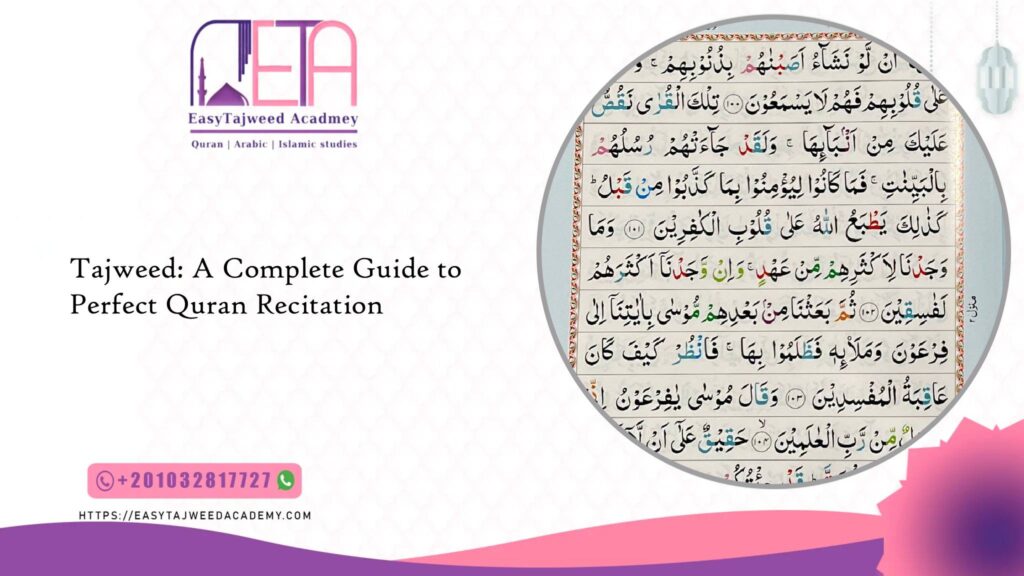
Discover the complete guide to Tajweed, its meaning, rules, benefits, learning methods, and expert tips to perfect your Quran recitation with clarity, beauty, and precision.
Tajweed is one of the most important sciences for every Muslim who wishes to recite the Quran correctly, beautifully, and exactly as it was revealed to the Prophet Muhammad ﷺ. The word “Tajweed” comes from the Arabic root “j-w-d,” which means to improve, to beautify, or to make something excellent. When applied to the Quran, Tajweed refers to the set of rules that govern pronunciation, articulation, elongation, and the rhythmic flow of Quranic recitation. These rules ensure that every letter is pronounced from its proper articulation point (makhraj) and with its correct characteristics (sifat).
Learning Tajweed is not only a matter of technical accuracy; it is a spiritual discipline that strengthens one’s relationship with the Quran. It transforms recitation from simple reading into an act of devotion, reverence, and deep reflection. From beginners learning the basics to advanced students refining their fluency and melody, Tajweed offers a lifelong journey of improvement.
In this complete guide, you will explore the history, foundations, benefits, rules, techniques, levels, and study methods of Tajweed. Whether you are starting your Tajweed journey or seeking mastery, this guide will provide everything you need to know to recite the Quran with precision, beauty, and confidence.
What Is Tajweed? Understanding Its Meaning and Purpose
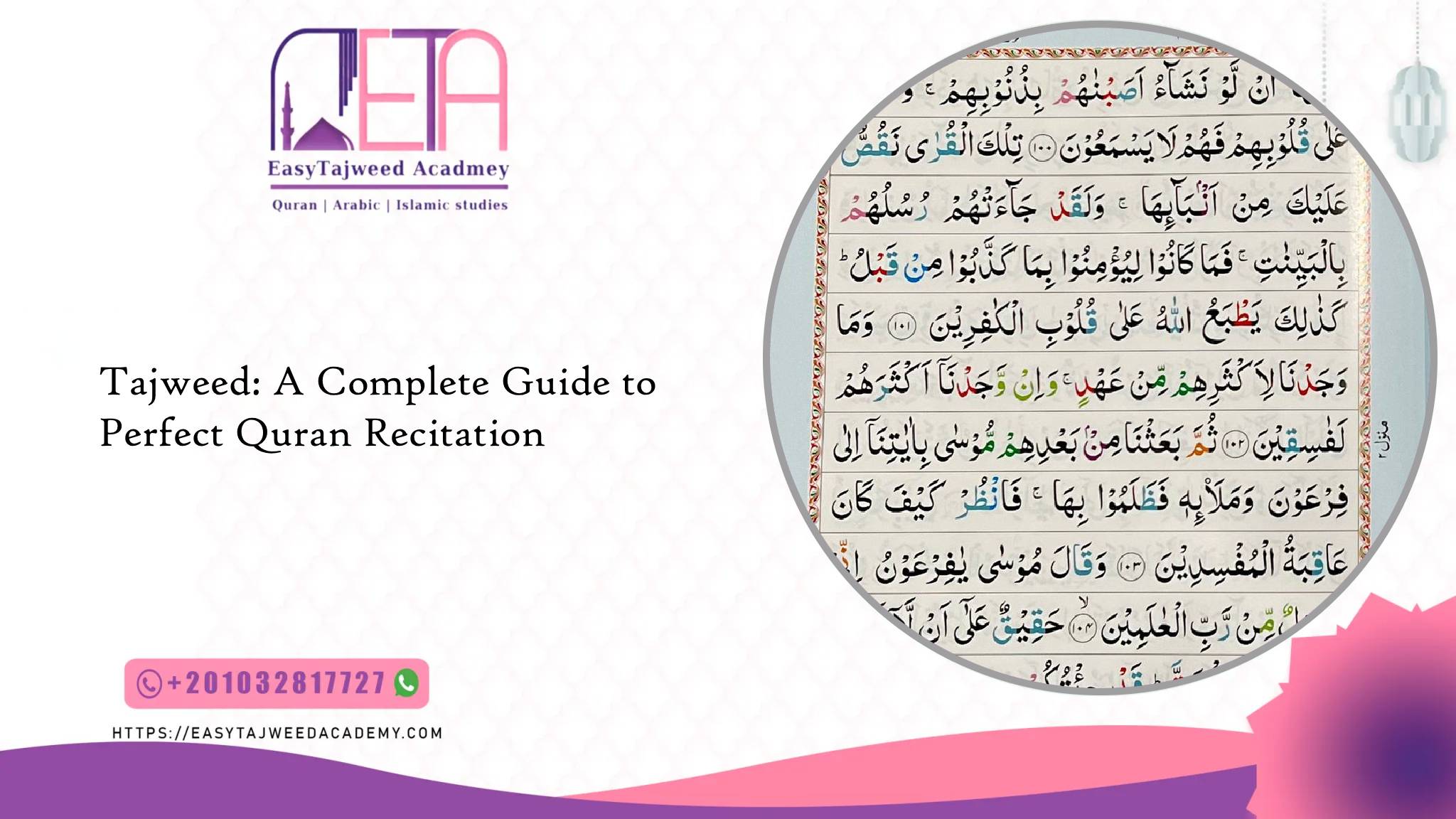
Tajweed refers to the set of rules that guide Muslims in pronouncing each letter of the Quran correctly, ensuring the recitation mirrors the way Prophet Muhammad ﷺ recited it. At its core, Tajweed is all about precision, beauty, and respect for the divine words of Allah.
When Muslims talk about Understanding Tajweed Meaning and Purpose, they refer to learning how every sound, letter, and rule shapes a more accurate and spiritually uplifting recitation. Tajweed protects the Quran from mispronunciation and helps readers feel more connected to the message they are reciting. This is why many students turn to modern learning platforms like Easy Tajweed Academy, where expert tutors simplify the rules and guide learners step by step.
Tajweed isn’t just about technical pronunciation; it deepens one’s relationship with the Quran by enhancing focus, clarity, and emotional impact. Through proper articulation, observing elongation, mastering stops, and understanding characteristics of Arabic letters, reciters bring life to every verse.
The purpose of Tajweed also includes preserving the Quran’s linguistic perfection across generations, allowing both beginners and advanced learners to read with confidence and devotion. Whether someone is completely new to Quran reading or seeking to refine their recitation, learning Tajweed opens the door to a more meaningful spiritual experience. With structured lessons, personalized guidance, and an easy learning approach provided by institutions like Easy Tajweed Academy, anyone can begin their journey toward mastering the art and beauty of Quranic recitation.
The Historical Development of Tajweed
The historical development of Tajweed reflects the deep dedication of early Muslim scholars to preserving the exact pronunciation of the Quran as recited by the Prophet Muhammad ﷺ. In the earliest days of Islam, Proper recitation was not written down as formal rules; rather, it was naturally practiced through direct learning and oral transmission.
As Islam spread across diverse regions and non-Arabic speakers embraced the faith, scholars recognized the urgent need to codify these recitation rules to protect the Quran from mispronunciation. This led to the early works of scholars like Abu Ubaid al-Qasim ibn Sallam in the 9th century, who documented phonetic principles and articulation points.
Over time, additional scholars expanded on these foundations, creating a detailed science that included makharij (letter articulation), sifat (letter characteristics), rules of noon sakinah, meem sakinah, madd (elongation), and stopping principles. By the time the major qira’at and recitation methods were compiled, Proper recitation had evolved into a precise, well-organized discipline studied by Muslims worldwide.
Today, this rich legacy continues through modern platforms such as Easy Tajweed Academy, which aims to bridge classical scholarship with contemporary learning methods. Using the preserved teachings of early scholars, institutions like Easy Tajweed Academy ensure that learners not only understand the technical rules but also appreciate the centuries of scholarship behind them. Thanks to this historical journey, Proper recitation remains a living science that continues to safeguard the beauty, clarity, and authenticity of Quranic recitation for every generation.

Why Is Tajweed Important? The Benefits of Learning It
Learning Tajwid offers numerous spiritual, religious, linguistic, and personal benefits. It enhances both recitation quality and spiritual connection.
1. Preserving the Words of Allah
When recited correctly, the Quran is preserved exactly as it was revealed—without distortion or alteration.
2. Enhancing Spiritual Experience
Correct recitation elevates the soul and increases khushu’ (focus and humility) during worship.
3. Beautifying the Quran’s Sound
The Quran is meant to be recited melodiously. Tajweed adds beauty, clarity, and rhythm to every verse.
4. Avoiding Errors That Change Meaning
Improper pronunciation can change the meaning of words. Tajweed ensures accuracy.
5. Strengthening Arabic Skills
Tajwid teaches correct articulation, helping learners improve Arabic reading and speaking.
6. Building Confidence in Recitation
With practice, learners develop strong fluency and the ability to recite comfortably in prayer or gatherings.
The Foundations of Tajwid: Core Elements You Must Know
The foundations of Tajwid focus on core elements like correct pronunciation, articulation points, letter characteristics, and proper elongation. These essential rules help readers recite the Quran accurately and beautifully. With structured guidance from our Academy, learners can easily master these fundamentals and build a strong foundation.
It begins with understanding its foundational components. These basics are essential before learning advanced rules.
1. Makharij Al-Huruf (Articulation Points)
Each Arabic letter has a specific point in the mouth or throat where it originates. There are 17 articulation points, categorized into major areas like:
- Throat (Halq)
- Tongue (Lisan)
- Lips (Shafatain)
- Nasal cavity (Khaishoom)
- Oral cavity (Jawf)
For example:
- Hamza (ء) originates deep in the throat
- Qaf (ق) is pronounced at the back of the tongue
- Meem (م) uses the lips
Mastery of makharij prevents mixing similar letters like:
-
س vs ص
-
ذ vs ز
-
ق vs ك
2. Sifat Al-Huruf (Characteristics of Letters)
Each letter has permanent characteristics such as:
-
Hams (breathiness)
-
Shiddah (pressure)
-
Istifal (low tongue level)
-
Isti’la (elevated tongue)
Some letters have unique traits like:
-
Tafkheem (heavy) – e.g., ص، ض، ط، ظ، ق
-
Tarqeeq (light) – most other letters
These characteristics define the sound quality of each letter.
3. Ghunnah (Nasal Sound)
Ghunnah is a nasal vibration lasting two counts, applied in:
-
Noon Mushaddad
-
Meem Mushaddad
-
Ikhfa rules
-
Idgham with ghunnah
This sound is one of the most recognizable features of Quran recitation.
4. Madd (Elongation)
Madd refers to stretching certain vowels for a specific duration. There are:
-
Natural Madd: 2 counts
-
Secondary Madd: 4–6 counts depending on the rule
Elongation adds rhythm and melody to recitation.
5. Rules of Noon Saakin and Tanween
These include:
-
Izhar (clear)
-
Idgham (merge)
-
Iqlab (convert)
-
Ikhfa (hide)
Mastering these rules ensures smooth transitions between letters.
6. Rules of Meem Saakin
Including:
-
Idgham Shafawi
-
Ikhfa Shafawi
-
Izhar Shafawi
These rules apply to the letter “Meem” when sakin.
7. Waqf and Ibtida’ (Stopping and Starting Rules)
Knowing where to stop or begin ensures correct meaning. Incorrect pauses can alter the intended message.
Step-by-Step Guide to Learning Tajweed Even as a Beginner
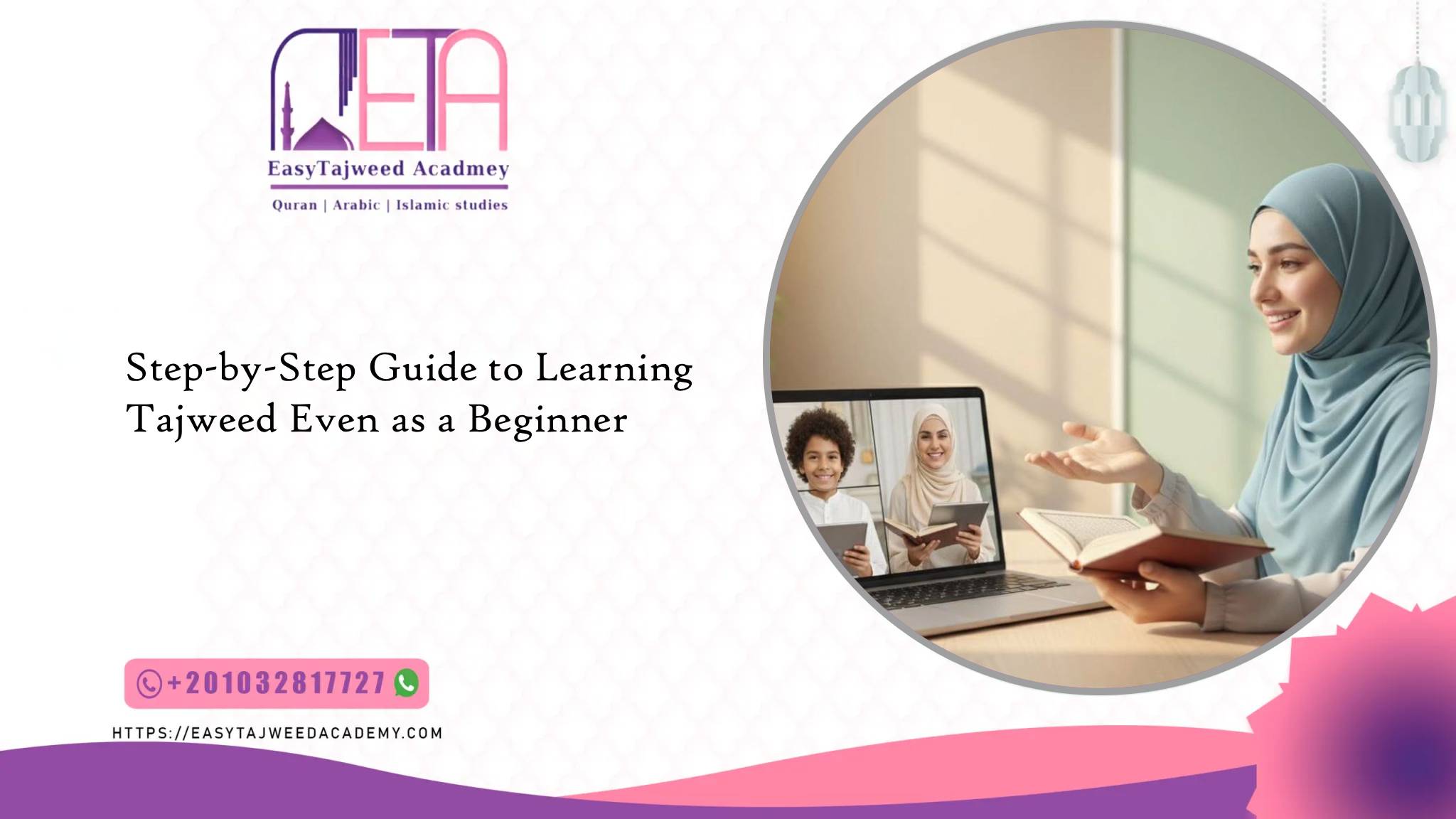
A step-by-step guide to learning Tajwid for beginners starts with mastering Arabic letters, articulation points, and basic pronunciation rules. Consistent practice and guided correction are essential for progress.
Easy Tajweed Academy supports beginners with simple lessons, expert tutors, and structured learning, making Tajweed accessible and easy to follow from the very first step.
Learning Tajweed can be easy if you follow a structured path.
1. Start With Correct Arabic Letter Pronunciation
Learn each letter’s sound and origin point. This is the foundation.
2. Learn Basic Tajweed Rules Gradually
Start with:
-
Makharij
-
Sifat
-
Ghunnah
-
Noon saakin
-
Meem saakin
-
Madd
3. Practice with a Certified Quran Teacher
Self-study is helpful, but Tajweed requires correction. A qualified teacher ensures accuracy.
4. Listen to Expert Reciters Daily
Recommended reciters include:
-
Al-Husary
-
Al-Minshawi
-
Abdul Basit
-
Mishary Alafasy
Listening sharpens rhythm and melody.
5. Practice Reciting Out Loud
Record yourself. Compare with correct recitations. Adjust mistakes.
6. Repeat Verses Slowly and Accurately
Speed comes after precision.
7. Learn the Melody
Tarteel is slow, rhythmic recitation. It helps internalize Tajwid naturally.
Common Tajweed Mistakes and How to Avoid Them
Common mistakes include confusing articulation points, rushing recitation, and misapplying elongation rules. These errors can affect clarity and accuracy. With expert guidance from our Academy, learners receive correction, practice exercises, and personalized feedback, helping them avoid mistakes and develop confident, precise Quranic recitation skills.
1. Mixing Up Similar-Sounding Letters
Due to weak articulation training.
Solution: Practice makharij daily.
2. Ignoring Ghunnah
Skipping nasal sounds makes recitation flat.
Solution: Count ghunnah for two beats.
3. Overstretching or Understretching Madd
Improper timing disrupts rhythm.
Solution: Learn Madd categories and practice with a timer.
4. Incorrect Pauses
Stopping at the wrong word alters the meaning.
Solution: Follow the stopping symbols and tafsir guidance.
5. Reading Too Fast
Speed leads to distortion.
Solution: Recite with tarteel: slow, clear, rhythmic.
Tajweed for Kids, Adults, and Beginners: Different Learning Paths
Kids
-
Learn through repetition, songs, and interactive exercises
-
Progress fastest with fun, visual lessons
Adults
-
Prefer structured rules
-
Often need help correcting long-standing habits
-
Benefit from one-on-one guidance
Beginners
-
Must focus on letters and basic rules first
-
Should avoid advanced melodies until basics are mastered
Advanced Skills for Serious Learners
Advanced skills focus on mastering intricate rules like precise letter characteristics, complex madd forms, and smooth transitions between sounds.
Serious learners refine rhythm, clarity, and fluency through disciplined practice. With expert tutors at Easy Tajweed Academy, students receive personalized training to elevate their recitation to a professional and spiritually enriching level.
Once basic rules are mastered, advanced students work on
1. Mastering the Seven and Ten Qira’at Styles
Different recitation modes, each with its own phonetic differences.
2. Perfecting Recitation Melody (Maqamat)
Enhances emotional depth and beauty.
3. Continuous Mushaf Reading Without Error
Develops fluency and precision.
4. Memorizing Tajweed Poetic Texts
Such as Al-Jazariyyah.
How to Practice Tajweed Daily: A Practical Routine
A practical daily Tajweed routine includes slow recitation, repeating verses, and focusing on one rule at a time. Listening to skilled reciters also strengthens accuracy and rhythm. With structured guidance from Easy Tajweed Academy, learners can follow consistent practice plans that build confidence, precision, and steady improvement in Quranic recitation.
1. 10 minutes of letter articulation drills
Focus on difficult pairs like:
س / ص — ط / ت — ذ / ظ — خ / ح
2. 15 minutes of listening
Choose one reciter and follow along.
3. 10 minutes of reading with your teacher
Check mistakes and refine articulation.
4. Recite one page slowly with full tajweed
Focus on applying rules consciously.
5. Memorize one rule per day
Use flashcards or apps to retain rules.
Why Tajweed Is a Lifelong Journey
Tajweed is a lifelong journey because mastery grows through continuous practice, reflection, and deeper understanding of Quranic recitation. Even experienced readers keep refining their skills.
With ongoing support from the best Online Quran Academy, learners stay motivated, consistently improving their precision and spiritual connection to the Quran throughout every stage of life.
It is not a course; you complete it is a skill that grows with continuous practice, reflection, and listening. Even expert reciters continue refining their skills. As your understanding deepens, your recitation becomes more:
-
Precise
-
Beautiful
-
Emotionally moving
-
Spiritually fulfilling
The journey of Tajweed strengthens your relationship with the Quran and transforms recitation into an act of devotion filled with meaning.
Conclusion
Tajweed is the heart of proper Quran recitation. It safeguards pronunciation, enhances beauty, and preserves the divine message exactly as it was revealed. Whether you are a beginner or an advanced student, learning Tajweed opens the door to a deeper connection with the Quran, improves your Arabic skills, and increases your spiritual presence in worship.
The key to mastering Tajweed is consistency, guidance from a qualified teacher, and daily practice. With passion and dedication, anyone—child, adult, or senior—can achieve beautiful recitation and confidence in reading the words of Allah.
………….FAQ………….
1. What is Tajweed in Quran recitation?
Tajweed is the set of rules that govern the correct pronunciation and articulation of every letter in the Quran.
2. Why is Tajweed important for Muslims?
It preserves the accuracy of Quranic recitation, prevents mistakes, and beautifies recitation as originally taught by the Prophet Muhammad ﷺ.
3. Can beginners learn Tajweed easily?
Yes. With step-by-step lessons, a qualified teacher, and consistent practice, beginners can learn Tajweed gradually and effectively.
4. How long does it take to learn it?
Most learners master the basics within 3–6 months, while full fluency and advanced skills may take longer depending on practice.
5. Do I need a teacher to learn Tajweed?
While self-learning helps, a certified teacher is essential to correct pronunciation mistakes and ensure proper application of rules.
6. What are the most important Tajweed rules to start with?
Start with:
-
Makharij (articulation points)
-
Sifat (letter characteristics)
-
Ghunnah
-
Madd rules
-
Noon Saakin & Tanween rules
7. Can kids learn Tajweed?
Yes, children often learn even faster than adults, especially through fun, interactive lessons.
8. Can I learn Tajweed online?
Yes. Online Tajweed classes are widely available and offer flexible schedules, qualified tutors, and interactive tools for practice.
