

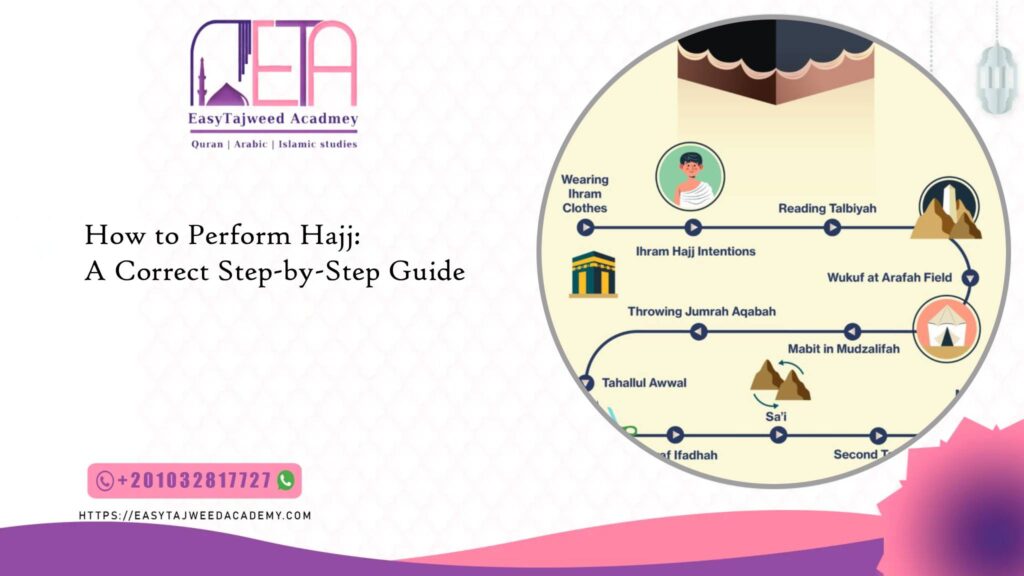
We carry a quiet hope in our hearts as we plan this sacred Perform Hajj. For many of us, the pilgrimage is a lifelong calling that asks for sincere intention and steady preparation.
Hajj is obligatory for able-bodied adults with means and takes place each year in Dhul-Hijjah, from the 8th to the 13th. Millions of people join to perform Hajj; recent counts often reach two to three million, with rare exceptions. For further reading, take a look at Wudu. This connects well with Perform Umrah.
In this guide, we map the major steps and rites to perform Hajj: entering ihram at the miqat, tawaf around the Kaaba, honoring the black stone, sa’i between Safa and Marwa, standing at Arafat, nights in Muzdalifah, stoning at Mina, sacrifice when required, hair trimming, and final tawafs. Related reading: check out Learn english online.
We will renew our intention to perform Hajj, follow the Prophet and his companions, and tend to practical needs so each pilgrim moves with dignity, patience, and presence. This introduction sets our aim: to help us perform hajj with clarity and heart. Those preparing spiritually for this journey can also learn quran online through flexible lessons that support steady study from home.
Key Takeaways
- Hajj is an annual obligation in Dhul-Hijjah for eligible Muslims.
- The major rituals of performing Hajj follow a clear step sequence across sacred days.
- Millions join the pilgrimage, so planning and patience matter.
- Intention and conduct, inspired by the Prophet and companions, shape the experience.
- This guide prepares us practically and spiritually for each rite.
Our intention and vision to perform Hajj in the future
Before traveling to perform Hajj, we root our plan in a sincere intention that centers our worship on Allah alone. We begin by committing our hearts, making our aim personal and free from show. This single act guides every choice we make. If you’re interested, take a look at Preparing Quran teachers for arabs and non arabs. For further reading, take a look at Get Ijazah online with easy Tajweed academy.
We mark our plans to perform Hajj against the Islamic calendar, noting the days from the 8th to the 13th of Dhul-Hijjah so the time we set aside for prayer and study matches the sacred schedule. Worth a look: Learn Islamic studies with easy Tajweed academy. For more on this, take a look at our Learn Tajweed online for free with easy Tajweed academy.
We will reflect on our present state and the place we wish to reach spiritually. Small daily steps build that path: morning remembrance, short lessons, and steady prayer at home so our journey becomes a continuation of worship.
- Renew intention: we promise to refresh it at each rite and while traveling.
- Patience and gratitude: we prepare our minds to perform Hajj for crowds, delay, and testing.
- Learning goals: duas, rulings, and etiquette, so when performing hajj, we move with clarity.
- Learners who want a broader foundation in Quran, Arabic, and Islamic learning can also explore the Best Online Academy for Quran and Arabic Learning.
We choose kindness in every action to perform Hajj, keeping our words measured and our focus fixed on the Hereafter. You can also explore Why choose easy Tajweed academy for additional guidance. You can also explore How to read the Quran with Tajweed a guide for additional guidance.
Easy Tajweed Academy b the best Online Islamic Center for Kids to educate Muslims about Hajj rituals, rules, and spiritual preparation through online Islamic courses, guiding learners to perform Hajj correctly. This connects well with Understanding Tajweed rules. Related reading: check out Memorize the Quran with easy Tajweed academy.
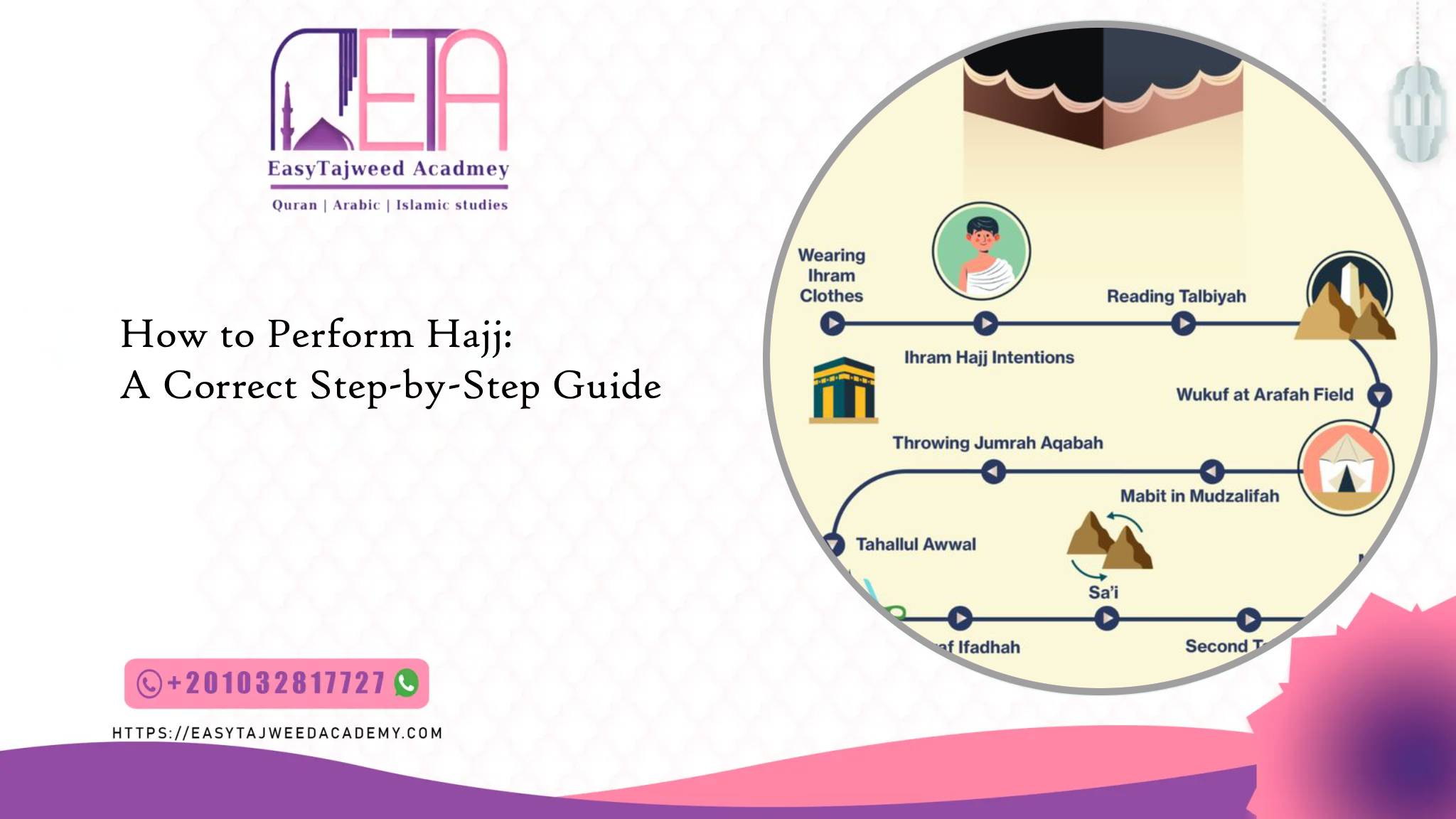
Preparing to perform Hajj: planning, types of pilgrimage, and our future timeline
A clear timeline helps us balance work, family, and sacred days on the Islamic calendar. We set dates early to perform Hajj and align vacation time with the 8th–13th of Dhul‑Hijjah so our year’s schedule supports worship and travel.
Selecting Tamattu, Qiran, or Ifrad
We choose Tamattu, Qiran, or Ifrad based on ritual needs and sacrifice obligations. Tamattu gives an Umrah break before the main rites and requires sacrifice. Qiran joins both rites without a break and also needs a sacrifice. Ifrad is Hajj alone and usually has no sacrifice.
Logistics from the United States and practical steps
U.S. pilgrims book flights to perform Hajj early, secure visas, and reserve lodging near Makkah and Mina. We keep passports, paperwork, and confirmation numbers handy. Ground transport and arrival plans cut stress on busy days.
Entering ihram, clothing, and grooming
We prepare clothing guidance for men and women. Men carry two unstitched cloths; women bring modest, comfortable attire. Entering ihram must occur at or before the miqat line. If we forget, a return to miqat or a compensatory sacrifice may be required. If you’re interested, take a look at Easy ways to memorize the Quran.
We trim hair and nails before assuming the sacred state, so the pilgrim begins in cleanliness. We also rehearse each step, the duas we’ll say, and the places we will pray. To build stronger confidence in Quran reading alongside spiritual preparation, learners can also explore A guide to learning Quran recitation. See also Learn Quran reading basics with easy Tajweed academy for more details. Worth a look: Tips to memorize the Quran.
Checklist
- Choose Tamattu, Qiran, or Ifrad and note the sacrifice rules.
- Align bookings with the Islamic calendar and Dhul‑Hijjah dates.
- Arrange flights, lodging in Saudi Arabia, and documents.
- Prepare clothing and grooming before entering ihram.
| Choice | Main feature | Sacrifice required |
|---|---|---|
| Tamattu | Umrah first, break, then Hajj | Yes |
| Qiran | Umrah and Hajj combined without a break | Yes |
| Ifrad | Hajj only, no Umrah included | No (generally) |
Entering ihram at the miqat: intention, clothing, and the talbiyah we repeat
Crossing the miqat marks the moment our outward travel becomes inner devotion. We set a clear intention and gently move from preparation into the sacred state. This act frames our conduct for the days ahead.
Miqat points and directions
We identify our miqat by the direction we travel. The main points are Dhu’l‑Hulayfah (from Madinah), Al‑Juhfah (northwest), Yalamlam (southeast), Qarn al‑Manazil (northeast), and Dhat ‘Irq (east).
| Miqat | Direction |
|---|---|
| Dhu’l‑Hulayfah | From Madinah (north) |
| Al‑Juhfah | From the northwest |
| Yalamlam | From the southeast |
| Qarn al‑Manazil | From the northeast |
| Dhat ‘Irq | From the east |
Clothing guidance for men and women
We put on two unstitched pieces of cloth for men and choose modest, simple clothing for women. Sandals are allowed, and a face covering is not required for women in this state.
Restrictions and our conduct
In this sacred state, we avoid perfume, hair removal, hunting, marital relations, and disputes. We keep our speech gentle and our focus on prayer and patience.
The talbiyah and timing of our praise
We raise the talbiyah often: Labbayk Allahumma Labbayk… Men recite it aloud while women recite softly. We say words of praise at the times we move between places, remembering that we come for Allah alone.
- Keep documents and essentials close for safe movement.
- Turn delays into moments of dhikr and short supplication.
How to perform Hajj on arrival: tawaf, the Black Stone, and Sa’i between Safa and Marwa
Entering the tawaf area, we steady our breath and face the Black Stone to begin seven circuits in the correct direction. We move counterclockwise, honoring each circuit as a worshipful step and avoiding crowding that harms others.
Beginning at the Black Stone and the seven circuits
We begin at the Black Stone, signal or touch it gently when space allows, and then proceed with the seven tawaf circuits. The first three rounds for men may include Raml; we follow the Sunnah of the Prophet Muhammad without haste.
Maqam Ibrahim, two rak’ah prayer, and Zamzam
After tawaf, we pause by Maqam Ibrahim and offer two rak’ah of prayer if possible. We then drink Zamzam with gratitude, asking Allah for strength for the next step of our journey.
Sa’i between Safa and Marwa
Sa’i is seven laps between Safa and Marwa, remembering Hajar’s trust. We walk calmly, briskly between the green markers when safe, and keep lanes clear for elders and families.
- Orderly movement: protect others and avoid pushing toward the stone.
- Umrah within Tamattu: after completing Umrah Hajj in Tamattu, we may exit ihram, rest, and trim hair before preparing again for the 8th.
- Local respect: as pilgrims in Saudi Arabia, we follow regulations and show kindness at every step.
“Let safety, patience, and devotion guide each turn and every step around the Kaaba.”
The days of Hajj ahead: Mina, Arafat, and Muzdalifah in sequence
The next days call us outward: Mina first, then the long standing at Arafat, and the night beneath Muzdalifah’s sky. We move with purpose, keeping our hearts steady and our state of ihram when required.
Day of Tarwiyah in Mina
On the eighth, we go to Mina and fill the day with prayer and remembrance. We shorten four-unit prayers and maintain dignity among the tent city of people. For further reading, take a look at Quran memorization.
We re-enter ihram for Tamattu when needed and spend the night under tents, resting and saving energy for what follows.
Day of Arafat and wuquf
On the ninth, we proceed to Arafat and combine Dhuhr and Asr at Dhuhr time. We stand in wuquf from noon until sunset, facing the Qibla in sincere supplication.
We remember the companions who gathered here and keep our direction fixed during the dua. We take breaks, aid women and elders, and guard hydration.
Night in Muzdalifah
After sunset, we move together for Muzdalifah, combining Maghrib and Isha at the appointed time and resting under the open sky.
Before sunrise, we collect small, smooth pebbles and keep valuables safe. We sleep with gratitude and rise with resolve, prepared for the next rituals.
“Every delay or crowded moment becomes an opportunity for dhikr and quiet patience.”
- Keep group plans clear and check the time for each movement.
- Protect the weak and share water during hot hours.
- Collect stones thoughtfully before sunrise and store them safely.
Eid day rites in Mina: stoning, sacrifice, and trimming or shaving hair
On the morning of the tenth, our steps turn toward Mina, where decisive rites mark the Eid day. We move with quiet resolve, aware that each act completes an arc of worship begun earlier.
Ramy at Jamarat al‑Aqabah: We cast seven pebbles deliberately, saying “Allahu Akbar” with each throw. We choose small stones and watch our surroundings so no one is harmed. These stones remind us to reject temptation and renew our resolve.
Sacrifice and care for the needy: Pilgrims in Tamattu or Qiran arrange the animal through authorized channels. Meat is then distributed to families in need, and we intend compassion as our sacrifice serves others.
Grooming and closure: Men may shave or trim hair, and women may trim a fingertip length. This act seals the step with humility and renewal.
Tawaf al‑Ifadah and Sa’i: We then head for the Haram to perform tawaf al‑Ifadah and sa’i, pause near Maqam Ibrahim for two rakah of prayer, and drink Zamzam with gratitude.
“Each pebble cast is a small, decisive act that clears our path toward Allah.”
- Keep pace steady, hydrate, and avoid crowding in busy corridors.
- Assist women and elders through narrow lanes and choose safer paths.
- Remember that these rites complete the core pillars and bring us closer to completing our umrah hajj obligations where relevant.
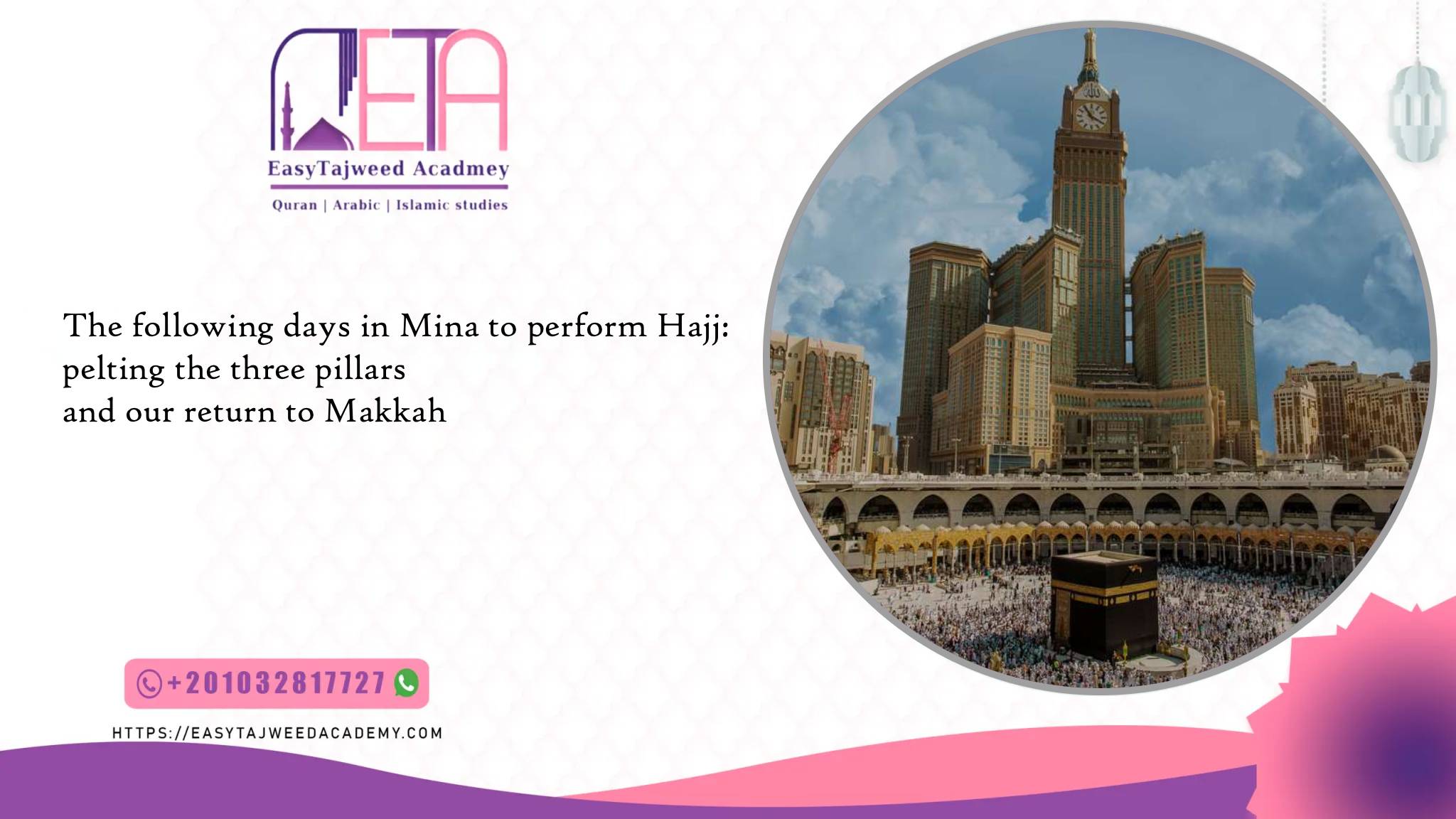
The following days in Mina to perform Hajj: pelting the three pillars and our return to Makkah
The days in Mina shape our resolve. We follow a clear order and keep our focus steady. These moments teach patience and measured devotion as we complete the required acts.
Pelting order and times
After midday on the 11th and 12th, we cast seven small pebbles at each Jamarah in sequence: small, then middle, then large.
Those who remain until the 13th repeat the same throws that day. We track the times carefully and move only during the appointed window so our rites match the rule and our intention stays sound.
Staying nights and choosing departure
We stay the night in Mina between castings, rest among tents, and keep hearts engaged in prayer and dhikr. Each day here is simple: sleep, supplicate, and prepare for the next round.
On the twelfth, we decide whether to depart or remain until the thirteenth. We weigh crowd levels, group needs, and safety so that every pilgrim feels secure.
Farewell rites: Tawaf al‑Wadaa
Before we leave Makkah, we perform Tawaf al‑Wadaa as a final embrace of the sacred place. Menstruating women are excused from this circumambulation.
“These days of Mina refine our discipline, teaching consistency, humility, and the strength to choose what pleases Allah.”
- Follow the stoning order and wait for the correct time each day.
- Keep stones small, hands steady, and guard those nearby.
- Return to Makkah with softened hearts and renewed commitment after the farewell tawaf.
Etiquette, timing, and common mistakes we avoid while performing Hajj
Etiquette to perform Hajj and careful timing shape our days on this sacred journey. Small choices keep our state pure and our intent clear. We guard each moment to perform Hajj so worship remains sincere and safe.
Stay at Arafat until sunset; protect the space at the Black Stone
To perform Hajj, we commit to remaining in Arafat until sunset, using that full time for standing, prayer, and quiet supplication. Leaving early undermines the main rite and the unity of the gathering. This connects well with Quran teaching online.
At the black stone, we give room and avoid crowding. Gentle movement and patience protect others and honor the place.
Notes for women
Women wear modest, comfortable layers and may skip tawaf when menstruating without shame. We plan routes and quieter times so women and men in our group avoid crush points and feel supported.
Health, hydration, and pacing
We pace each step, schedule rest, and carry water. Hydration, shade, and short breaks sustain the pilgrim through hot hours and long nights.
Keep medical needs close, learn where help is offered, and watch for heat stress in companions. Use calm words and gentle reminders to defuse disputes; mercy steadies every move.
“Patience, care, and measured timing let our intention shine brighter than the busiest moment.”
- Remain in Arafat until sunset and avoid early departure.
- Give space at the Black Stone; do not gather tightly or push.
- Do not fix specific duas to each tawaf round; speak from the heart.
- Plan shade, water, rest, and medical access for every stage.
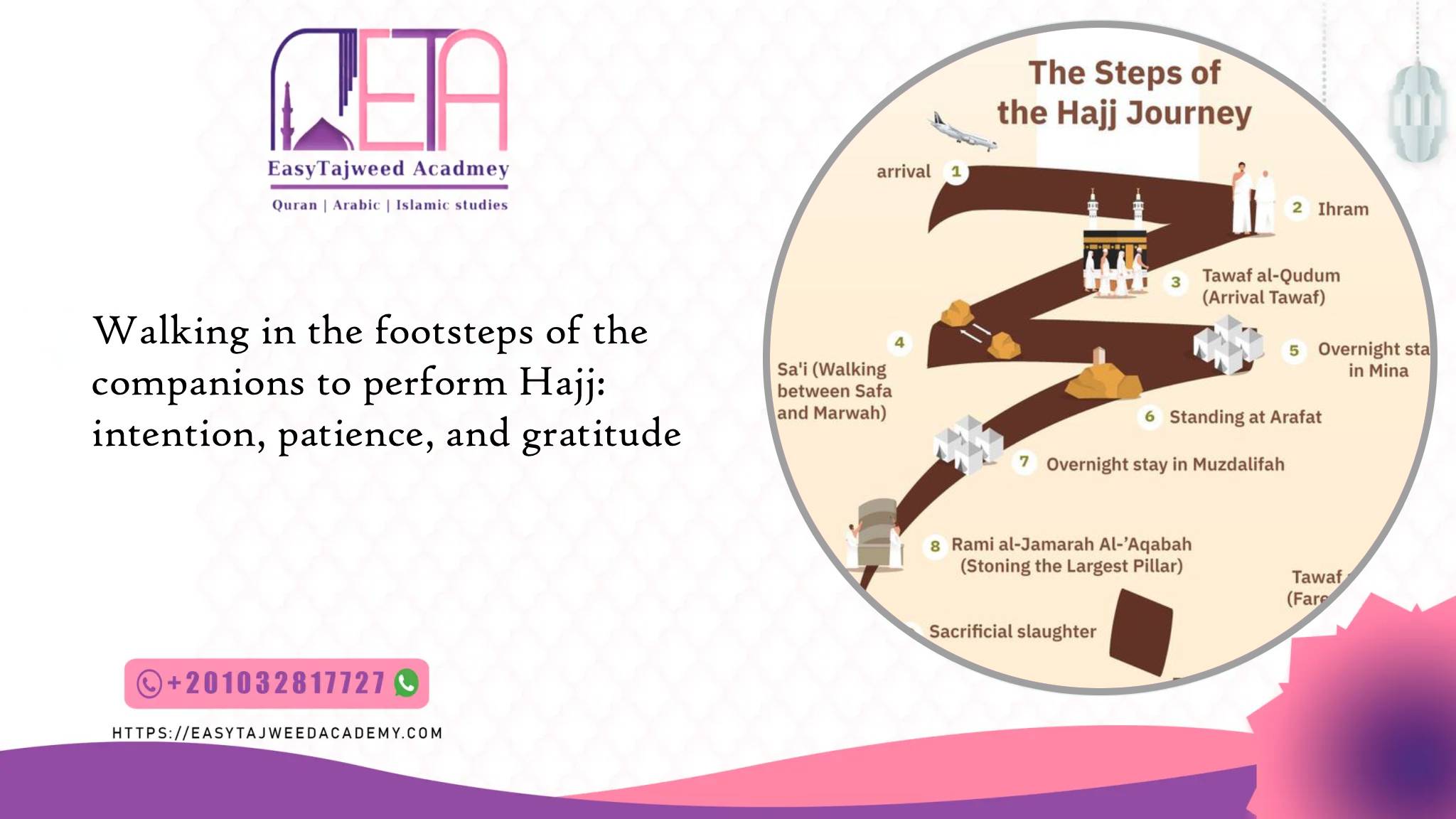
Walking in the footsteps of the companions to perform Hajj: intention, patience, and gratitude
We walk where the Prophet and his companions once walked, letting their steadiness shape our steps. This is not merely ritual motion. It is a pledge of inner direction.
Keeping our hearts aligned with Allah alone as we follow the Prophet’s sunnah
We model our intention on Prophet Muhammad and the companions, asking for steady hearts that seek Allah alone.
We keep our physical direction toward the Qibla in prayer and our character toward mercy and generosity in every meeting.
The core pillars to perform Hajj—Ihram, standing at Arafat, and Tawaf al‑Ifadah—remain central, yet we pair each rite with humility and sincere intent.
“May our outward acts reflect the inward devotion taught by the sunnah.”
- We embrace patience as the companions did and let gratitude shape our choices.
- We carry lessons home: homes that welcome prayer, patience, and service.
- We reflect often, asking Allah for acceptance and resolve to benefit others.
Conclusion
Let this conclusion bind our intentions, the times we kept, and the rituals we lived into a lasting plan for the year ahead. We pledge to perform hajj with knowledge of the days, the night watches, and the precise time each rite demands.
We remember standing at Arafat until sunset, rising at sunrise from Muzdalifah, and casting seven pebbles and smooth stones in order. We treasure the brief prayer near Maqam Ibrahim, the calm of performing tawaf, and the small act of trimming hair in humility, all this to perform hajj.
To perform hajj, we arrange sacrifices on our behalf when required and care for the weak. We close with a simple calendar of prayer, charity, and study so the place of this journey shapes our days all year.
Frequently Asked Questions
What is perform Hajj, and why is it important in Islam?
Hajj is the fifth pillar of Islam and a sacred pilgrimage to the holy city of Makkah. It is obligatory once in a lifetime for every adult Muslim who is physically and financially able to perform it. Hajj purifies the soul, strengthens faith, and symbolizes unity among Muslims worldwide.
Who is required to perform Hajj?
Every Muslim who meets the following conditions must perform Hajj at least once:
- They are adults and sane.
- They have the financial means to cover the journey and family needs.
- They are physically capable of completing the rituals.
- The path to Hajj is safe and accessible.
When is Hajj performed each year?
Hajj is performed during the Islamic lunar month of Dhul-Hijjah, specifically from the 8th to the 12th of the month. These days mark the key rituals of Hajj, including the stay at Mina, Arafat, and Muzdalifah.
What are the main steps to perform Hajj?
The key rituals of Hajj include:
- Ihram – Entering the sacred state with the intention of performing Hajj.
- Tawaf al-Qudum – Circumambulating the Kaaba seven times.
- Sa’i – Walking between Safa and Marwah hills.
- Standing at Arafat (Wuquf) – The most important ritual, symbolizing forgiveness.
- Muzdalifah – Collecting pebbles and spending the night under the open sky.
- Ramy al-Jamarat – Stoning the pillars representing Satan.
- Animal Sacrifice (Qurbani) – Symbolizing Prophet Ibrahim’s obedience to Allah.
- Tawaf al-Ifadah – Another circumambulation performed after returning to Makkah.
- Shaving or cutting hair and final Tawaf before completing Hajj.
What is the difference between Hajj and Umrah?
Hajj is obligatory once in a lifetime and performed during Dhul-Hijjah, while Umrah is a non-obligatory minor pilgrimage that can be performed any time of the year. Hajj includes more rituals and has fixed dates.
What types of Hajj can be performed?
There are three types of Hajj:
- Hajj al-Ifrad: Performing only Hajj without Umrah.
- Hajj al-Qiran: Combining Hajj and Umrah with one Ihram.
- Hajj al-Tamattu’: Performing Umrah first, exiting Ihram, then performing Hajj later with a new Ihram.
What are the spiritual benefits of performing Hajj?
Performing Hajj brings immense spiritual rewards, including:
- Forgiveness of sins and renewal of faith.
- Strengthening of humility and patience.
- Deepened connection with Allah and the Muslim Ummah.
- Experiencing unity, equality, and sacrifice.
Can women perform Hajj without a Mahram (male guardian)?
According to most scholars, women should travel with a Mahram for Hajj. However, some modern Islamic rulings and certain countries’ Hajj regulations allow women to perform Hajj in organized groups without a Mahram, for safety reasons.
How long does it take to perform Hajj?
Hajj typically takes five to six days—from the 8th to the 13th of Dhul-Hijjah—depending on the group schedule, travel arrangements, and type of Hajj performed.
What is Tawaf, and how is it performed?
Tawaf means circling the Kaaba seven times in a counterclockwise direction. It symbolizes the believer’s devotion to Allah. Each round starts and ends at the Black Stone (Hajar al-Aswad), and supplications are made throughout.
What happens on the Day of Arafat?
On the 9th of Dhul-Hijjah, pilgrims stand at Mount Arafat from noon to sunset, praying, making du’a, and seeking forgiveness. It is the most essential pillar of Hajj, as the Prophet ﷺ said, “Hajj is Arafat.”
Is Hajj accepted without proper intention (Niyyah)?
No. A sincere intention (Niyyah) is essential for the acceptance of Hajj. Every act of worship in Islam, including Hajj, must be performed purely for the sake of Allah.
How much does it cost to perform Hajj?
The cost of performing Hajj varies depending on your country, accommodation, and travel package. On average, Hajj packages can range from $5,000 to $15,000 USD. Always choose licensed Hajj operators approved by official authorities. For more on this, take a look at our Online Quran classes for adults.
Tip: If you plan to perform Hajj, start preparing early physically, financially, and spiritually so that your journey becomes a source of lifelong blessings and peace.
