
Online Quran Classes
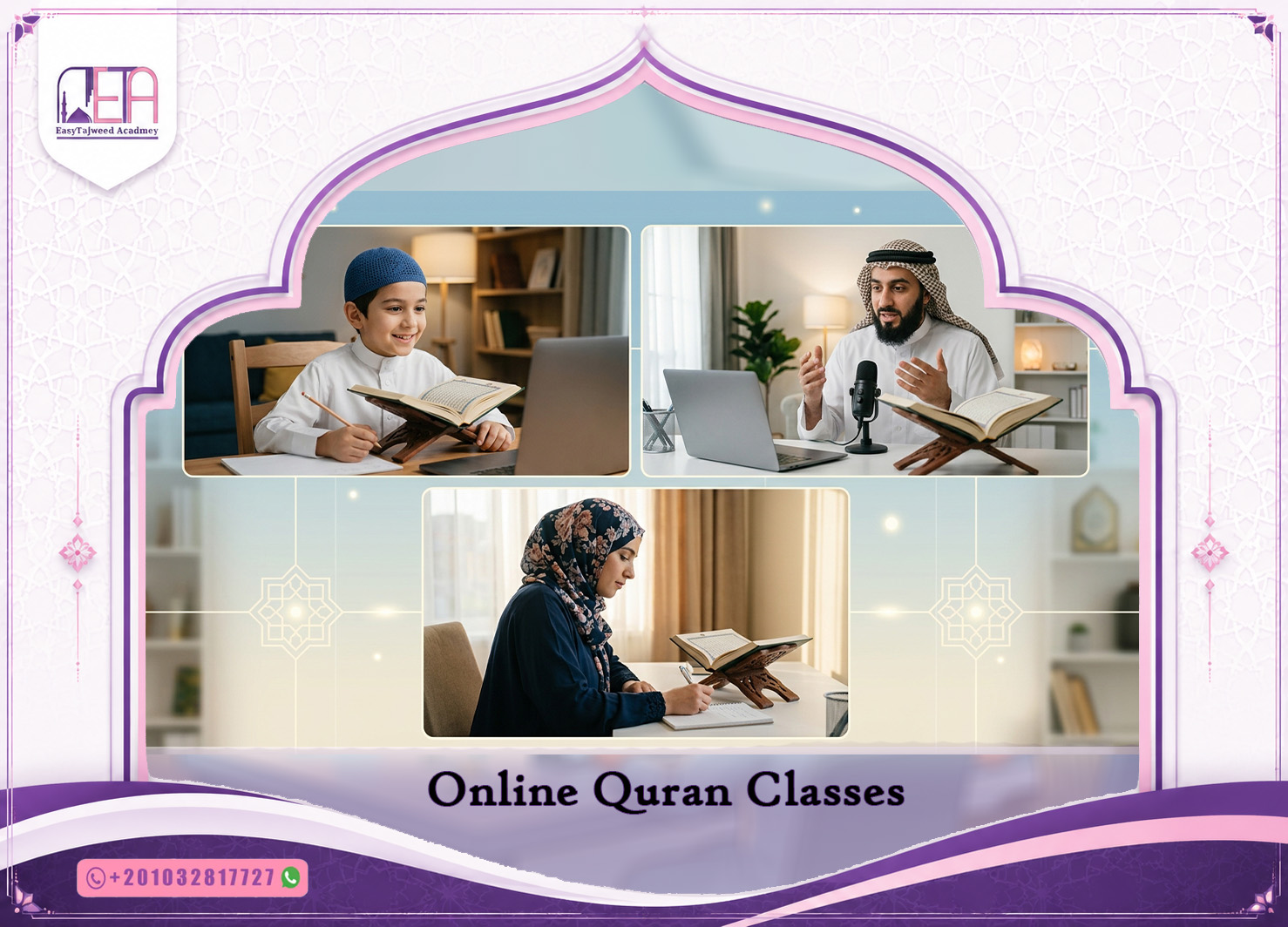
Online Quran classes provide flexible, one-on-one or group sessions with certified tutors for students of all ages. Courses generally cover Noorani Qaida, Tajweed (pronunciation rules), Hifz (memorization), and Tafseer. Many academies offer tailored schedules and free trial lessons.
Well-structured online Quran classes are available for all ages and levels, encompassing reading, Tajweed, memorization (Hifz), tafseer, and Arabic. Easy Tajweed Academy offers live, expert-led sessions, featuring personalized instruction and structured curricula. This platform caters to global audiences, providing authentic Islamic education with real-time interaction and progress tracking.
Online Quran Classes: In today’s fast-paced digital world, the significance of religious education cannot be overstated. For Muslims, learning the Quran is a lifelong journey that brings spiritual enrichment, guidance, and understanding. With the rise of technology and the internet, online Quran classes have emerged as a convenient and accessible way to learn and understand the teachings of Islam. Whether you are a beginner or someone seeking to deepen your knowledge, these virtual learning platforms provide a flexible, structured, and engaging environment for students of all ages.
What You Will Learn at Online Quran Classes?
Online Quran classes offer comprehensive, flexible instruction for all ages and skill levels. You can learn the Arabic alphabet, master recitation with Tajweed (proper pronunciation), memorize the Quran (Hifz), study Tafsir (exegesis), and explore broader Islamic studies—all through one-to-one live sessions with qualified instructors.
You Will Learn at Online Quran Classes:-
1. Fundamental Arabic & Reading (Noorani Qaida)
- Alphabet & Vowels: Learning to identify and pronounce individual Arabic letters and vocalization marks.
- Reading Fluency: Combining letter sounds to read words and sentences fluently before advancing to the full Quranic text.
2. Quran Recitation with Tajweed
- Proper Articulation: Mastering the exact phonetic pronunciation (Makharij) of each Arabic letter.
- Rules of Recitation: Understanding elongation (Madd), nasality (Ghunnah), and stopping rules to ensure a flawless and melodious recitation suitable for daily prayers.
3. Quran Memorization (Hifz)
- Step-by-Step Memorization: Guided sessions to memorize specific Juz’, short Surahs, or the entire Holy Quran.
Retention & Recall: Repetition and recollection exercises to ensure you retain what you memorize.
4. Interpretation (Tafsir)
- Context & Meaning: Exploring the historical background and the actual meaning of verses.
- Linguistic Analysis: Gaining a deeper understanding of the message of the Quran in its original language.
5. Islamic Studies
- Fiqh & Aqidah: Learning the rules of daily worship, prayer, and the fundamental beliefs of Islam.
- Seerah: Studying the life of the Prophet Muhammad and Islamic history.
6. Ijazah Certification
- Teaching Authorization: Advanced students can complete testing to earn an Ijazah, a formal certification allowing them to teach the Quran to others.
You can easily browse and interview hand-picked tutors using the platform, Easy Tajweed Academy, and explore foundational programs designed by the Academy.
How Online Quran Classes Work?
Online Quran classes connect students with qualified instructors via live video platforms. They replicate traditional one-on-one or small-group settings using screen-sharing and digital tools. Students log in from home to learn recitation, Tajweed, or memorization at their own pace. Online Quran classes are designed to be accessible and highly structured. The standard learning process works in a few key steps
1. Assessment and Placement
Before officially starting, most academies offer a free trial class to assess your or your child’s current recitation skills and Tajweed knowledge. If starting from scratch, the curriculum begins with the Arabic alphabet (Noorani Qaida); otherwise, the teacher tailors the coursework to your goals
2. Live Interactive Sessions
Online Quran classes take place via communication apps such as Zoom, Google Meet, or Skype. The sessions are usually one-on-one, providing an individualized and judgment-free learning environment.
3. Digital Teaching Tools
Instructors do not just listen to you read; they actively guide you using digital aids:
- Screen Sharing: Teachers display a digital Quran on their screen so both of you can follow along as you read aloud in real-time.
- Live Corrections: The instructor provides immediate visual and verbal feedback on pronunciation and Tajweed rules.
- Whiteboards and Flashcards: Used to break down difficult letters, explain rules, and memorize vocabulary
4. Progress and Flexibility Online Quran classes
Online Quran classes can easily fit into your routine, with the flexibility to choose timings that suit your daily life. You progress at your own pace through a mapped-out curriculum, which can cover basic recitation, Hifz (memorization), or Tafsir (interpretation/translation).
5. Revisions and Recording
Many online academies provide session recordings. This allows you to re-watch the live lesson or review the teacher’s specific feedback on your pronunciation between sessions