

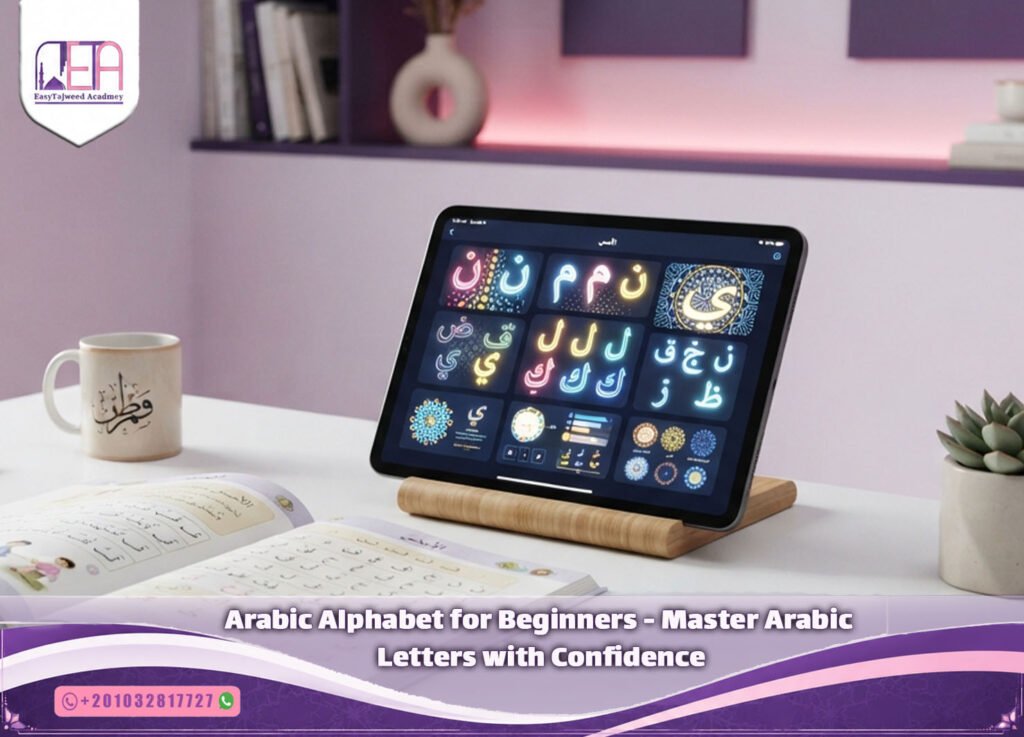
The Arabic alphabet has 28 consonant letters written from right to left. Every letter changes its shape depending on its position in a word (isolated, beginning, middle, or end), though it remains fully phonetic. Short vowels are written as small diacritic marks above or below the letters rather than standalone characters.
Beginners should start by learning the 28 core letters of the Arabic alphabet in their four forms. Mastering shapes is essential for reading and writing. Additionally, familiarize yourself with vowel marks (fathah, kasrah, dammah) and the hamza, which affect pronunciation and meaning.
Learning the Arabic alphabet is the first and most important step toward reading, writing, and speaking Arabic. Whether you want to understand the Quran, communicate with Arabic speakers, or explore a new culture, the Arabic alphabet opens the door to endless opportunities. Many people think the Arabic alphabet is difficult. In reality, anyone can learn it with the right method, regular practice, and expert guidance.
The Arabic alphabet is different from the Latin alphabet used in English. It has its own unique shapes, sounds, and writing style. Once you understand these basics, learning new words becomes much easier. Every letter has a special sound, and each one plays an important role in reading and pronunciation. As your confidence grows, you will be able to recognize the letters of the Arabic alphabet, write simple words, and read short sentences.
Easy Tajweed Academy helps every beginner build a strong foundation through interactive classes, clear explanations, and regular practice.
This guide is designed for beginners, children, and adults who want a complete introduction to the Arabic alphabet. It explains each concept in simple language with practical examples and easy learning tips. You will also discover how experienced native teachers can make the learning process faster and more enjoyable.
What Is the Arabic Alphabet?
The Arabic alphabet is the writing system used for the Arabic language. It is also used by several other languages with small modifications. Unlike the Latin alphabet, the Arabic alphabet is written from right to left. This may seem unusual at first, but most beginners become comfortable with it after a short time.
Many people ask, “What are the 28 letters of the Arabic alphabet?” The answer is simple. The standard Arabic alphabet contains 28 letters. Each letter has its own shape and sound. Together, these letters of the Arabic alphabet form every Arabic word.
One of the most interesting features of the Arabic alphabet is that most letters connect when writing words. This creates the beautiful flowing script that Arabic is famous for. Learning these connections is part of becoming confident in Arabic writing.
The Arabic alphabet for beginners does not require memorizing everything in one day. Instead, students usually learn a few letters at a time. They practice the shapes, repeat the sounds, and then read simple words.
The Arabic alphabet is also the foundation of Quran reading. Before learning Tajweed or advanced grammar, students must recognize every letter and pronounce it correctly.
As you continue learning the Arabic alphabet, you will notice patterns that make reading easier. With daily practice, every beginner can move from recognizing individual letters to reading complete words with confidence.
Importance of Learning the Arabic Alphabet
Learning the Arabic alphabet is the key to mastering the Arabic language. Without understanding the letters of the Arabic alphabet, it becomes difficult to read, write, or pronounce words correctly.
For Muslims, learning the Arabic alphabet is especially valuable because it allows them to read the Quran in its original language. Correct pronunciation helps preserve the meaning of every verse. Even if your goal is not religious, learning the Arabic alphabet gives you access to Arabic books, newspapers, websites, and conversations.
Children benefit from learning the Arabic alphabet at an early age because young learners tend to remember new letters and sounds quickly. Adults also succeed when they practice consistently. Age is never a barrier to learning.
The Arabic alphabet also improves your understanding of Arabic pronunciation. Many Arabic sounds do not exist in English. Learning them early prevents common mistakes later.
Some important benefits include:
- Better reading and writing skills.
- Strong pronunciation from the beginning.
- Easier vocabulary learning.
- Greater confidence when speaking Arabic.
- A solid foundation for Quran reading.
- Better communication with native Arabic speakers.
Students at Easy Tajweed Academy follow a structured learning path. Each lesson introduces new letters, reviews previous lessons, and includes practical examples. Native teachers correct pronunciation and help students build confidence step by step.
Learning the Arabic alphabet is a small investment that brings lifelong rewards. Every lesson moves you closer to becoming an independent Arabic reader.
Easy Tajweed Academy offers the best Quranic Arabic classes online for learning to read the Quran for all ages
Key Features of the Arabic Alphabet
The Arabic alphabet has several unique features that make it different from many other writing systems. Understanding these features helps every beginner learn more efficiently.
First, the Arabic alphabet contains exactly 28 letters. Each letter represents a consonant, while short vowels are usually shown using special marks called diacritics. As students progress, they learn how these marks change pronunciation.
Second, the Arabic alphabet is written from right to left. This becomes natural after regular reading practice. Many beginners are surprised by how quickly they adapt.
Another important feature is that most letters have multiple forms. The shape of a letter changes depending on whether it appears at the beginning, middle, end, or by itself. Although this may seem challenging at first, the patterns become easier with practice.
The Arabic alphabet is also known for its elegant script. Arabic calligraphy has been admired for centuries because of its flowing and artistic appearance.
Key characteristics include:
- 28 unique letters.
- Right-to-left writing direction.
- Four common forms for many letters.
- Rich and beautiful Arabic script.
- Distinct sounds that require careful pronunciation.
- Strong connection between reading and writing skills.
Many students use flashcards, digital apps, and interactive exercises as a learning tool. Others enjoy educational games that let them play while learning new letters. Combining different learning methods helps improve memory and keeps lessons enjoyable.
At Easy Tajweed Academy, teachers introduce each feature gradually. Students practice reading, pronunciation, and writing during every lesson. This step-by-step approach helps learners master the Arabic alphabet without feeling overwhelmed.
Arabic Alphabet Chart with Letter Names and Pronunciation
One of the best ways to learn the Arabic alphabet is by studying a simple chart. A chart helps beginners recognize every letter, remember its name, and practice its pronunciation. Instead of trying to memorize all the letters of the Arabic alphabet at once, learn a few each day. Regular review makes learning easier and helps you remember each letter for a long time.
Many students ask, “What are the 28 letters of the Arabic alphabet?” The table below provides a simple answer. It includes each letter, its English name, and a basic pronunciation guide. Keep in mind that some Arabic sounds do not exist in the Latin alphabet. Listening to native speakers is the best way to pronounce them correctly.
| Arabic Letter | Name | Simple English Pronunciation |
|---|---|---|
| ا | Alif | A as in father |
| ب | Ba | B |
| ت | Ta | T |
| ث | Tha | Th as in think |
| ج | Jeem | J |
| ح | Ha | Deep H |
| خ | Kha | Kh |
| د | Dal | D |
| ذ | Dhal | Th as in this |
| ر | Ra | Rolled R |
| ز | Zay | Z |
| س | Seen | S |
| ش | Sheen | Sh |
| ص | Sad | Heavy S |
| ض | Dad | Heavy D |
| ط | Ta | Heavy T |
| ظ | Za | Heavy Z |
| ع | Ain | Deep throat sound |
| غ | Ghain | Gh |
| ف | Fa | F |
| ق | Qaf | Deep Q |
| ك | Kaf | K |
| ل | Lam | L |
| م | Meem | M |
| ن | Noon | N |
| هـ | Ha | H |
| و | Waw | W or long O |
| ي | Ya | Y or long E |
This Arabic alphabet chart is an excellent learning tool for children and adults. Print it, keep it near your study space, and review it every day. You can also make flashcards or play memory games using the chart. These activities help you recognize the letters of the Arabic alphabet faster.
How to Pronounce Arabic Letters Correctly
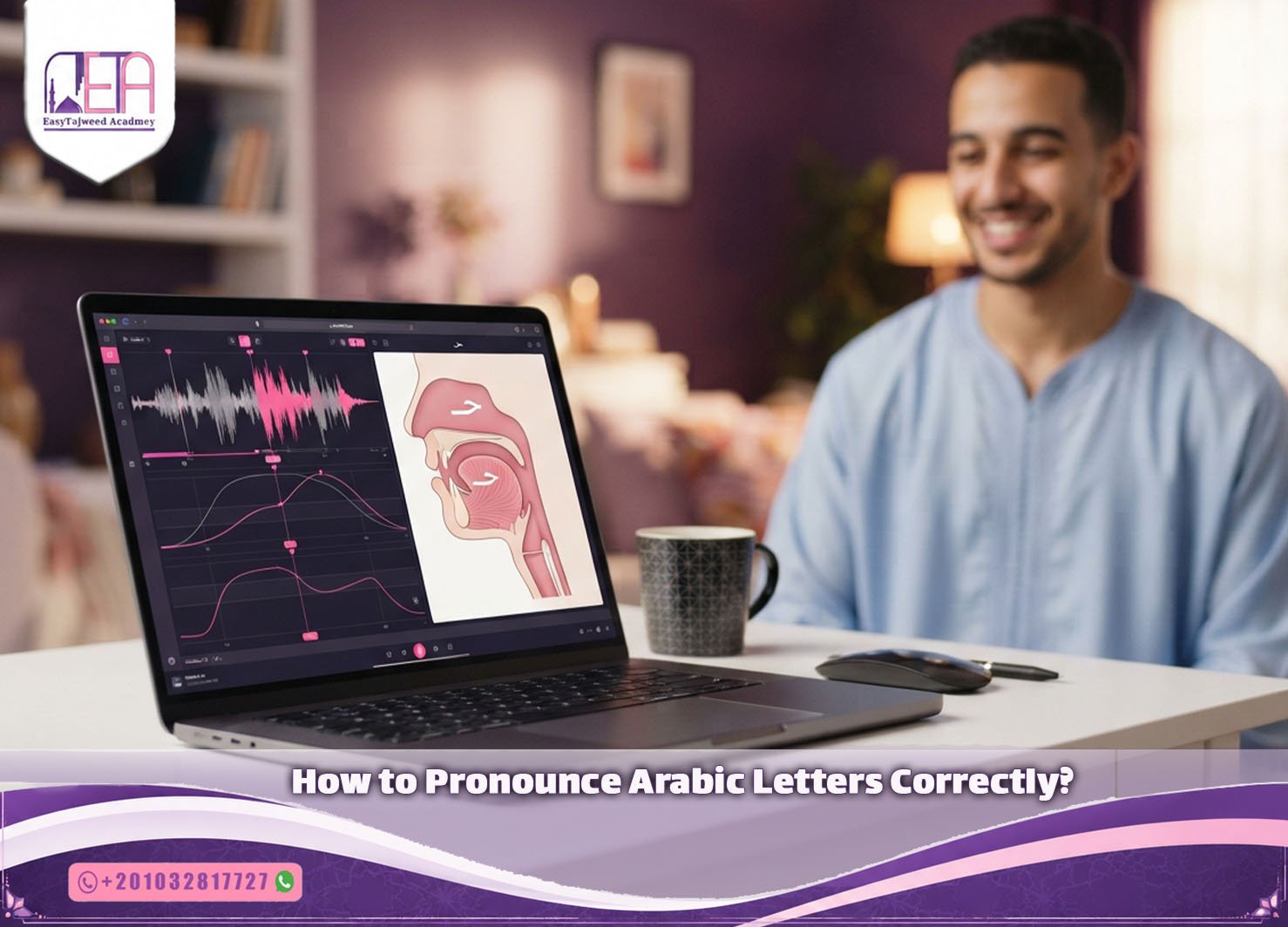
Correct pronunciation is one of the most important parts of learning the Arabic alphabet. Knowing the shape of a letter is only the beginning. You must also learn how each letter sounds. Clear pronunciation improves reading, speaking, and Quran recitation.
Some letters of the Arabic alphabet have sounds that are similar to English. For example, ب sounds like B, م sounds like M, and ك sounds like K. These are usually easy for beginners.
Other letters are unique to Arabic. Sounds such as ح, خ, ع, غ, and ق require practice because they come from different parts of the mouth and throat. These sounds cannot be copied perfectly using the Latin alphabet. Listening to native speakers is the best way to master them.
To improve your pronunciation:
- Listen carefully before repeating.
- Practice one letter at a time.
- Read simple words every day.
- Record your voice and compare it with a teacher.
- Repeat difficult sounds until they become natural.
- Practice with a native Arabic teacher whenever possible.
Do not worry if your pronunciation is not perfect in the beginning. Every beginner improves through daily practice. Small improvements each day lead to excellent results over time.
At Easy Tajweed Academy, native teachers explain the correct mouth position for every letter. Students hear authentic pronunciation, repeat after the teacher, and receive immediate feedback. This personalized approach helps learners avoid common mistakes before they become habits.
Remember that learning the Arabic alphabet is not a race. Focus on accuracy first, then increase your reading speed. Good pronunciation creates a strong foundation for speaking Arabic confidently and reading the Quran correctly.
Understanding the Different Forms of Arabic Letters
One feature that makes the Arabic alphabet unique is that many letters change their appearance depending on their position in a word. This surprises many beginners, but the system follows clear patterns that become easy with practice.
Most letters of the Arabic alphabet have four common forms:
- Isolated form
- Initial form (beginning of a word)
- Medial form (middle of a word)
- Final form (end of a word)
Although the shape changes, it is still the same letter. Learning these forms helps you read complete words instead of recognizing only individual letters.
For example, the letter ب (Ba) appears differently depending on where it is placed. The same is true for many other letters. A few letters, such as ا, د, ذ, ر, ز, and و, connect only on one side. Knowing this rule makes Arabic writing much easier.
The best way to remember different forms is through regular reading. As you see the same letter in different words, your brain naturally recognizes each version. Writing practice is equally important. Copying words helps you remember the shapes and improve your handwriting.
At Easy Tajweed Academy, teachers introduce connected letters gradually. Students first learn isolated letters, then move to connected writing, simple words, and short sentences. This step-by-step method keeps learning easy and helps every beginner gain confidence.
By understanding these different forms, you will soon read Arabic words naturally instead of stopping at every letter. That is a major milestone in mastering the Arabic alphabet.
Effective Tips to Learn the Arabic Alphabet Faster
Learning the Arabic alphabet becomes much easier when you follow a clear study plan. Many beginners think they need to memorize everything in one week. That is not necessary. Small daily lessons produce better results than long study sessions once a week. The goal is to build confidence one letter at a time.
Start by learning three or four letters of the Arabic alphabet each day. Repeat them several times before moving to new ones. Reading aloud helps you remember both the shape and the pronunciation. Writing each letter by hand also strengthens your memory. As your skills improve, begin reading short words and simple sentences.
The following tips can help you master the Arabic alphabet faster:
- Study the Arabic alphabet every day, even if only for 15–20 minutes.
- Practice both reading and writing during each lesson.
- Listen to native speakers to improve pronunciation.
- Review old letters before learning new ones.
- Use flashcards as a simple learning tool.
- Play educational games that teach Arabic letters and sounds.
- Watch beginner-friendly Arabic lessons online.
- Read children’s books with simple vocabulary.
- Practice with a qualified teacher who can correct mistakes early.
- Stay patient and celebrate small achievements.
Many students also keep a notebook where they write each new letter, its sound, and a few examples of words that use it. This habit makes review easier and improves long-term memory. Easy Tajweed Academy helps every beginner build a strong foundation through online Arabic classes and clear explanations.
Learn Arabic Alphabet A to Z in English with Native Teachers
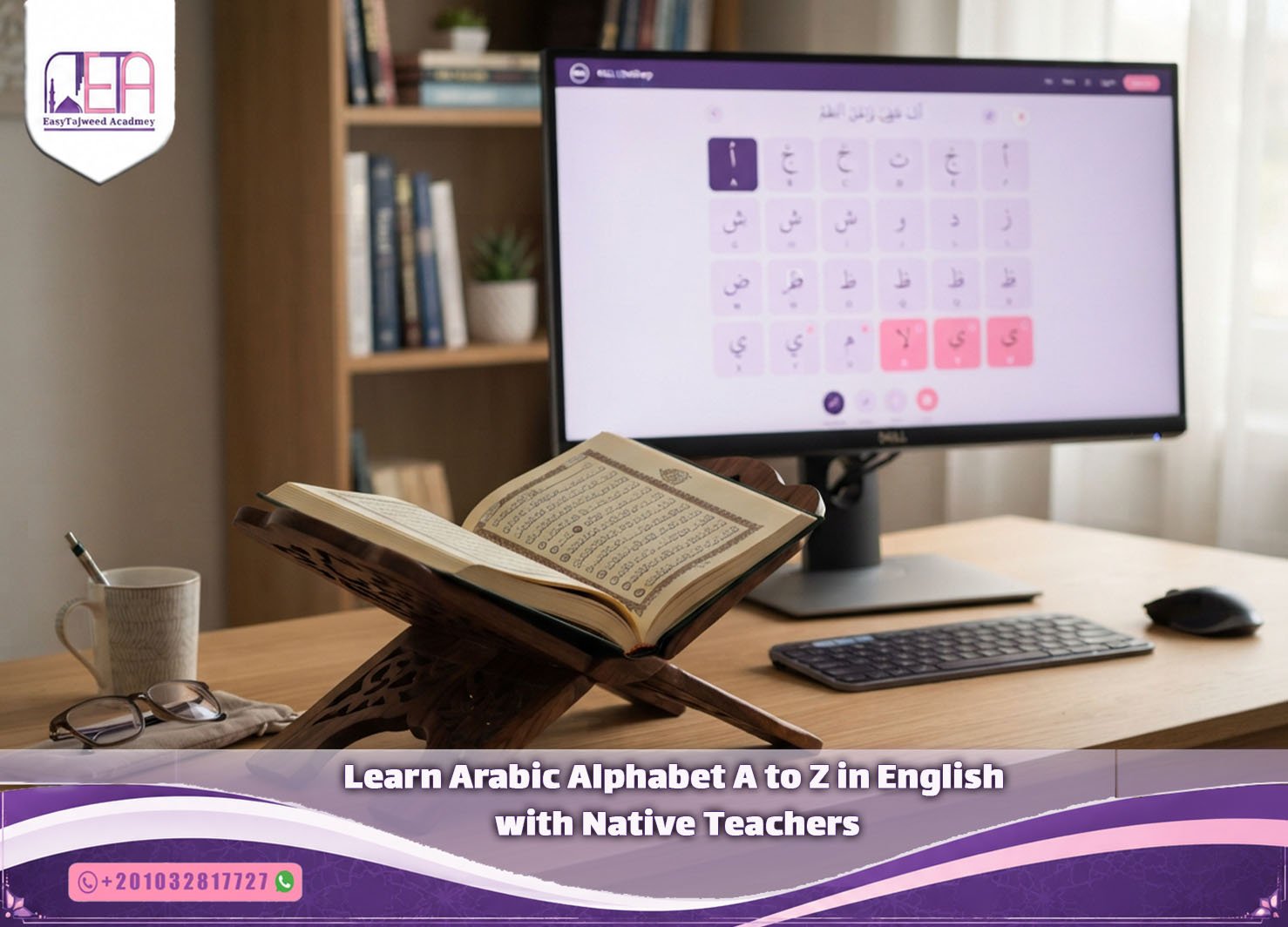
Many students prefer learning the Arabic alphabet in English because the explanations are easier to understand. This method is especially helpful for beginners, children, and adults who have no previous experience with Arabic. Native teachers explain each letter clearly while comparing it with familiar English sounds whenever possible.
Although some Arabic letters resemble sounds found in the Latin alphabet, many are unique. Native teachers explain these differences and demonstrate the correct mouth and tongue positions. Students hear authentic pronunciation and repeat each letter until they become comfortable with it.
A quality online course usually includes:
- Live lessons with native Arabic teachers.
- Step-by-step instruction for the Arabic alphabet.
- Clear pronunciation practice.
- Interactive reading and writing exercises.
- Real-life examples and vocabulary.
- Regular revision and progress checks.
- Flexible schedules for kids and adults.
Learning with native teachers also improves listening skills. Students become familiar with natural Arabic speech from the very beginning. This makes future lessons much easier because they already recognize the correct sounds and pronunciation patterns.
Easy Tajweed Academy provides complete online courses designed for learners of all ages. Native instructors teach the Arabic alphabet A to Z in English using simple explanations and interactive activities. Students practice every letter, improve their writing, and build confidence through live feedback and continuous support.
How to Choose an Online Arabic Course
Choosing the right course can make learning the Arabic alphabet easier and more enjoyable. Many online programs are available, but not all provide the same quality. A good course should help beginners progress step by step while offering expert guidance and regular practice.
Look for a course that starts with the letters of the Arabic alphabet before introducing words and grammar. A strong foundation helps students avoid confusion later. Qualified teachers should explain each letter, demonstrate its pronunciation, and provide practical examples.
Before joining an online course, consider these factors:
- Qualified native Arabic teachers.
- A structured curriculum for the alphabet for beginners.
- Live classes with interactive learning.
- Regular pronunciation correction.
- Reading and writing practice.
- Flexible class schedules.
- Lesson recordings for review.
- Affordable tuition and good student support.
- Positive reviews from other learners.
- Certificates of completion, if available.
It is also helpful to choose a course that uses modern learning tools, quizzes, and enjoyable activities. Interactive lessons keep students motivated and make it easier to remember new letters.
Many families choose Easy Tajweed Academy because it combines experienced teachers with a well-organized curriculum. Students receive personal attention, structured lessons, and continuous encouragement throughout their learning journey. The academy welcomes children, teenagers, and adults, making it an excellent choice for anyone who wants to learn the Arabic alphabet with confidence.
A quality course saves time, builds correct habits, and gives every learner the support needed to succeed.
Start Your Arabic Alphabet Journey with Confidence
Learning the Arabic alphabet is one of the most rewarding steps you can take. Every new letter you learn brings you closer to reading, writing, and understanding Arabic with confidence. Although the journey may seem challenging at first, steady practice makes each lesson easier than the last.
This guide has explained what the Arabic alphabet is, why it is important, how the letters of the Arabic alphabet are pronounced, and how their different forms work. You have also learned practical strategies to study more effectively and discovered the value of learning from native teachers.
Remember that success does not depend on learning quickly. It depends on practicing regularly. Spend a little time each day reviewing the Arabic alphabet, reading simple words, and writing each letter. These small habits will produce excellent results over time.
If you want expert guidance, Easy Tajweed Academy offers a complete learning experience for children, adults, and every beginner. The academy’s native teachers provide live instruction, personalized feedback, and engaging lessons that help students master the Arabic alphabet with confidence. From your very first class, you will build strong reading, pronunciation, and writing skills in a friendly and supportive environment.
