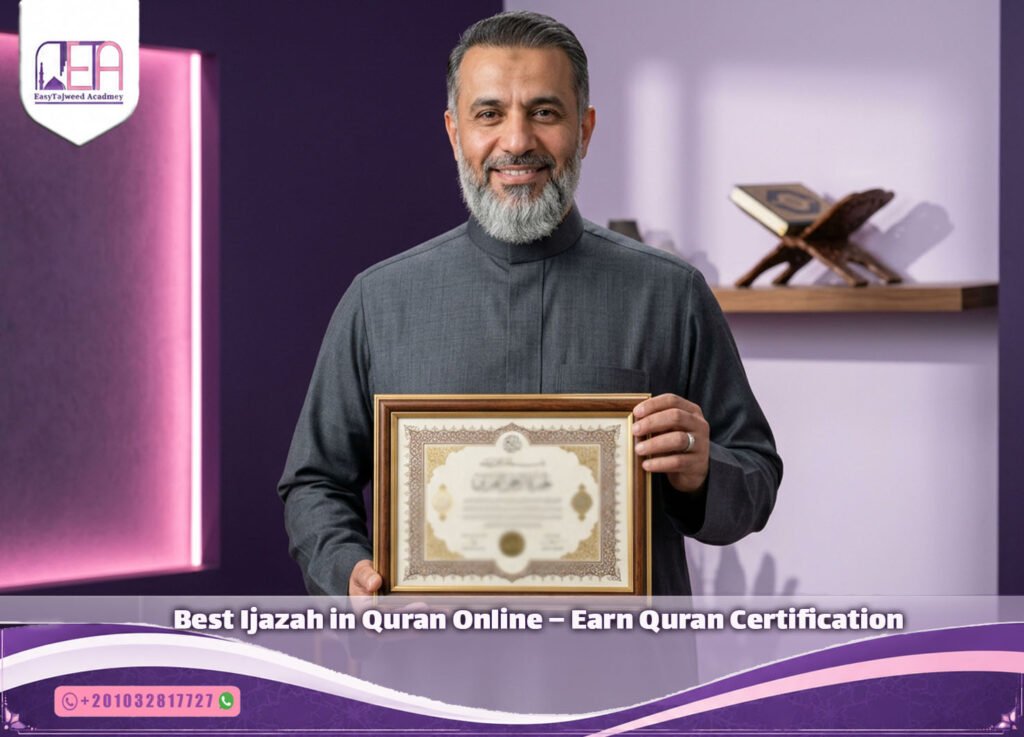
The best Ijazah in Quran is a formal Islamic certification that authorizes a student to teach and recite the Quran with proper Tajweed. A qualified scholar who has inherited the chain of transmission (isnad) from earlier generations grants it, ensuring authenticity. This endorsement signifies mastery of Quran recitation, memorization, and understanding, and is a vital part of traditional Islamic education. The ijazah in Quran is not merely a certificate but a spiritual and scholarly commitment to preserve the Qur’an’s integrity across generations.
Ijazah in the Quran is crucial for preserving the authentic pronunciation and transmission of the Qur’an across generations. It ensures that recitations follow the exact rules of Tajweed and the established chains of transmission (Sanad), maintaining linguistic and spiritual accuracy. This system prevents distortion or innovation, safeguarding the Qur’an’s integrity since its revelation.
With an Ijazah in Quran online program, learners can study from home while receiving personal guidance from experienced scholars and teachers. Online Ijazah in Quran classes can be especially useful for students who do not have access to qualified teachers in their local communities.
An Ijazah in Quran is not simply a certificate for completing a course. Traditionally, it is a form of permission or authorization given by a qualified teacher after the student demonstrates sufficient accuracy and competence. Depending on the program, it may focus on Quran recitation, Tajweed, memorization, or a particular Qira’ah.
For students searching for reliable ijazah online opportunities, choosing the right teacher and course matters greatly. Easy Tajweed Academy provides a structured environment where students can develop their Quran recitation skills under qualified guidance. The goal is not only to complete an Ijazah course, but to build accurate, confident, and responsible Quran learning habits.
What Is Ijazah in Quran Online?
An Ijazah in Quran is a formal authorization given by a qualified Quran teacher or scholar to a student who has demonstrated the required level of proficiency. In the traditional system, the teacher listens carefully to the student’s recitation, corrects mistakes, and determines whether the student is ready to receive permission. The process can involve a recognized chain of transmission, known as sanad, connecting teachers through generations of Quranic learning.
An Ijazah in Quran online follows the same basic educational principle while using modern technology to connect students and teachers. The student attends live online lessons, recites directly to the teacher, receives corrections, practices independently, and gradually works toward the required standard.
The exact meaning of an Ijazah in Quran can differ according to the type of Ijazah and the teaching tradition. Some programs focus on Quran recitation with Tajweed. Others may involve memorization or specific Qira’at. Therefore, students should understand exactly what an Ijazah online program offers before enrolling.
A genuine Quran Ijazah certificate should represent actual assessment and authorization rather than simple course attendance. The teacher must have appropriate qualifications and should be able to explain the program’s requirements clearly.
For a student, earning quran ijazah can be a meaningful milestone. It shows that the learner has reached a recognized level under a qualified teacher. It also comes with responsibility because anyone who receives authorization to teach the Qur’an should preserve accuracy and transmit what they have learned carefully.
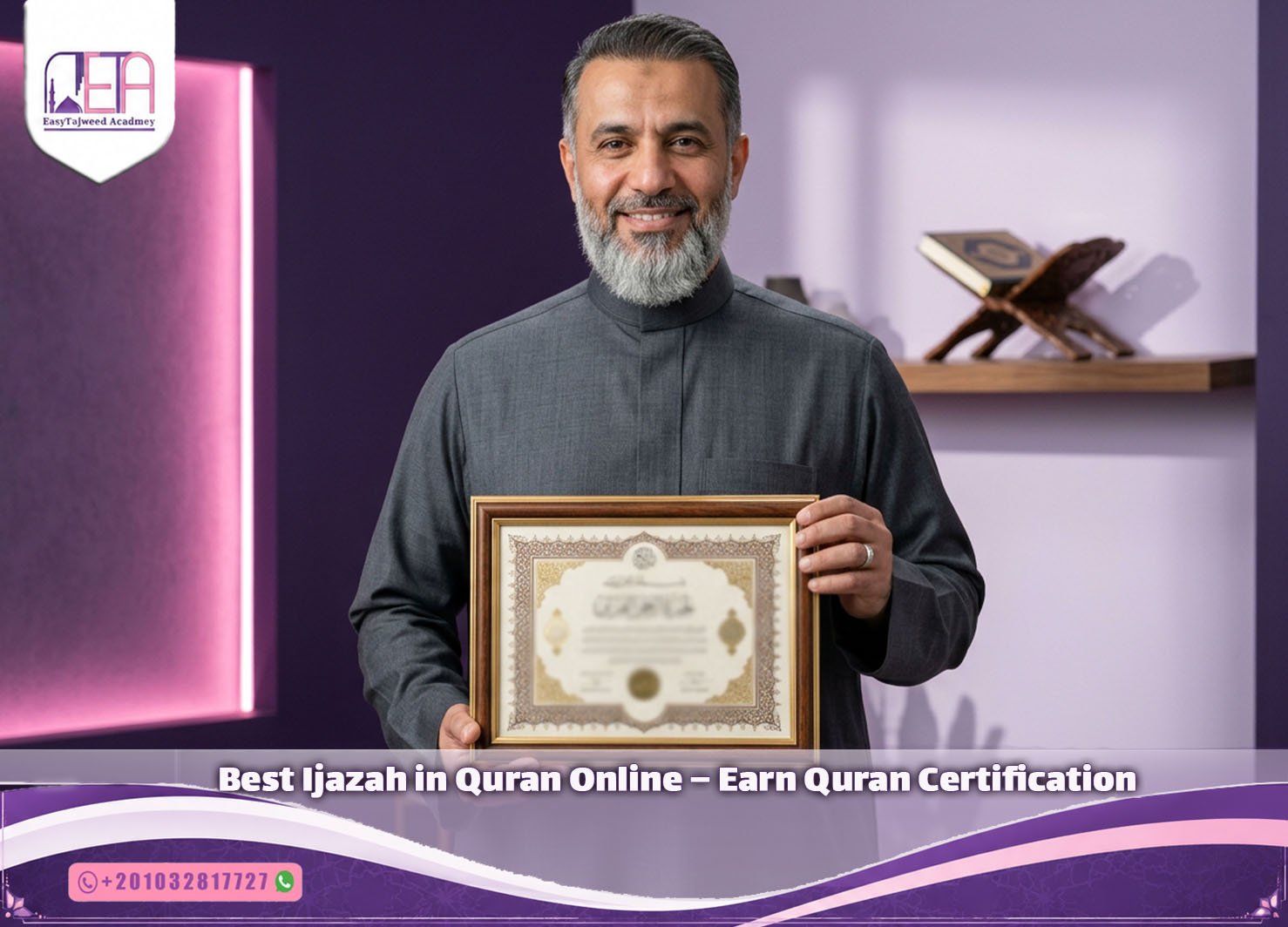
Benefits of Earning an Ijazah in Quran Online
One major benefit of earning an Ijazah in Quran online is access to qualified teachers regardless of where a student lives. A learner in a small town can potentially study with an experienced Quran teacher without relocating. This makes online Quran education practical for students, families, and working adults.
Another important advantage is personalized correction. Quran recitation cannot always be mastered by reading books or watching recorded videos. A teacher needs to listen to the student’s voice and identify errors in pronunciation, articulation, Tajweed, rhythm, and application. An Ijazah in Quran program provides this direct interaction.
Online learning also offers flexibility. Students can often arrange lessons around school, work, family commitments, or other responsibilities. This is especially helpful for adults who want to continue their Quran education while managing a busy schedule.
An Ijazah in Quran can also strengthen a student’s confidence. Regular feedback helps learners understand their weaknesses and work on them step by step. Instead of guessing whether their recitation is accurate, students receive professional guidance.
The benefits may include:
- Direct supervision from a qualified teacher.
- Individual Quran recitation correction.
- Flexible online lesson scheduling.
- Structured preparation for certification.
- Development of Tajweed and pronunciation skills.
- Greater confidence in reciting and teaching the Qur’an.
For new Muslims, an Ijazah in Quran can also provide a structured path after learning the basic rules of Quran reading. Beginners should not feel pressured to rush toward certification. The first goal should always be accurate learning. With patience and consistent practice, the student can progress toward advanced study.
Types of Ijazah in Quran You Can Earn Online
An online Quran Ijazah is an authenticated certificate and chain of transmission (sanad) that authorizes you to recite or teach the Quran. There are different types of Ijazah in the Quran, and understanding these types helps students choose an appropriate program.
Primary Types of Ijazah in the Quran
- Ijazah in Quran Recitation (Tilawah with Tajweed): Certifies that you can read the entire Quran directly from the copy (Mushaf) with flawless pronunciation and precise application of Tajweed rules, without needing to memorize it.
- Ijazah in Quran Memorization (Hifz): Certifies that you have memorized the entire Quran by heart and can recite it completely from memory with accurate Tajweed.
Ijazah in Quran by Narration and Readings (Qira’at)
- Single Narration: Focuses on one specific transmission method, such as Hafs ‘an ‘Asim (the most common globally) or Warsh ‘an Nafi (widely used in North Africa).
- Seven Qira’at: Covers the seven recognized reading methods through the path of Ash-Shatibiyyah.
- Three Qira’at: Covers three additional reading methods via Durrat Al-Ma’ani (Ad-Durrah al-Madiyyah).
- Ten Qira’at: The highest advanced level encompassing all ten major authentic readings through the method of Tayyibat al-Nashr.
Quran Ijazah Online with Expert Quran Scholars
The teacher is one of the most important parts of an Ijazah in Quran program. Quran learning depends heavily on accurate transmission. A student may understand Tajweed theory but still make mistakes while reciting. A qualified teacher can hear those mistakes and provide immediate correction.
When choosing an Ijazah Quran online program, students should investigate the teacher’s qualifications and teaching experience. They should also understand whether the teacher holds an Ijazah themselves and whether the program provides a recognized chain of transmission where applicable.
Easy Tajweed Academy can be considered by students looking for structured online Quran education with qualified teachers. Its approach can help learners develop their recitation skills through guided practice and individual correction rather than relying only on self-study.
A strong teacher does more than correct pronunciation. The teacher helps the student understand why a particular Tajweed rule applies and how to use it while reading the Qur’an. This creates deeper learning and encourages careful recitation.
For children, the teacher should also be patient and able to explain concepts in an age-appropriate way. Adults and new Muslims may need a different teaching pace. An effective Ijazah in Quran course should recognize these differences instead of treating every student in the same way.
The relationship between teacher and student is especially important in Quranic education. The student must be willing to listen, practice, accept correction, and remain consistent. The teacher, in turn, has a responsibility to assess the student honestly and only grant authorization when the required standard has been reached.
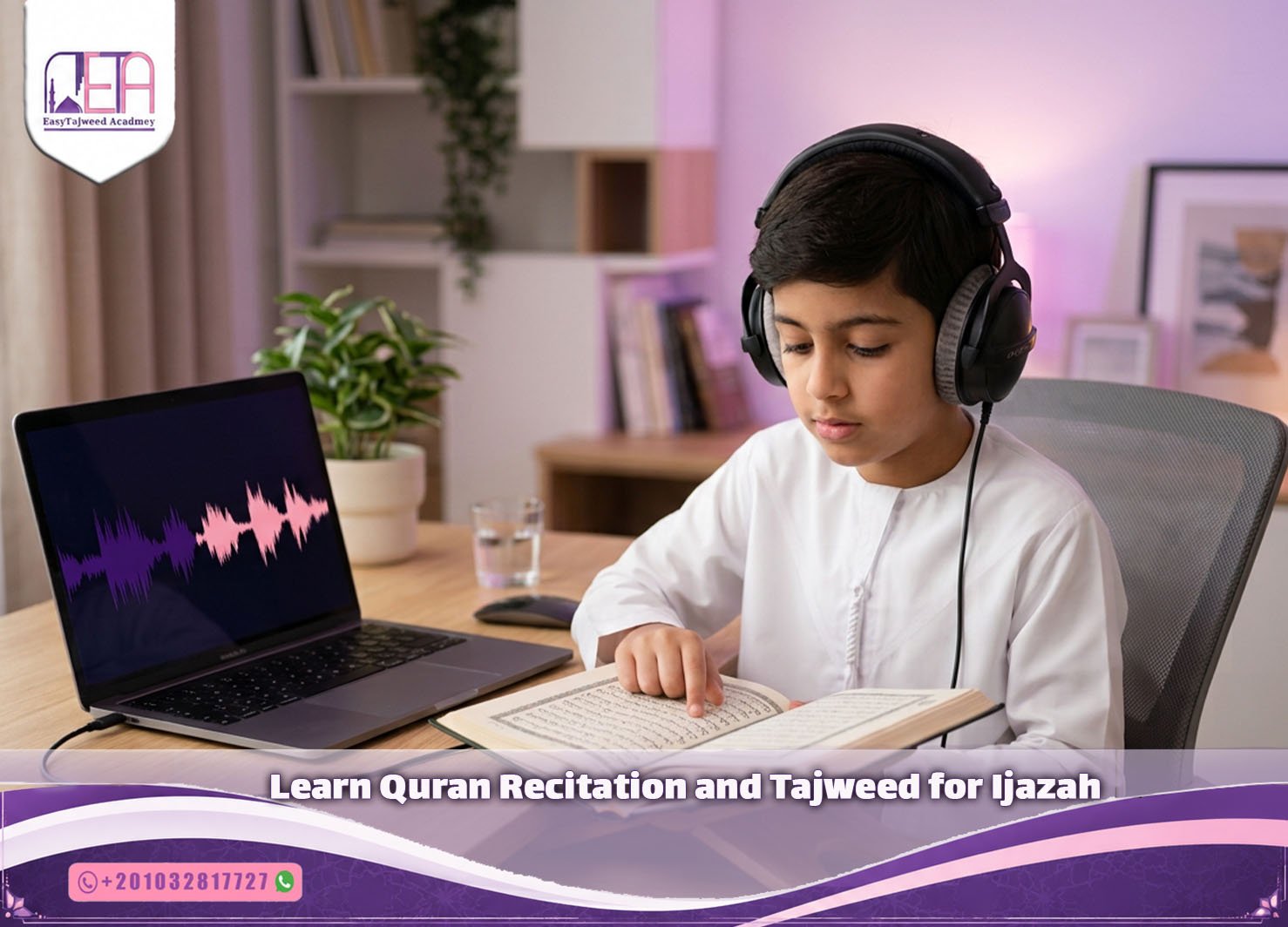
Learn Quran Recitation and Tajweed for Ijazah
Strong Quran recitation is at the heart of many Ijazah in Quran programs. Before a student can receive authorization, they need to demonstrate that they can recite accurately. This requires more than knowing Arabic letters. The learner must understand how sounds are produced and how Tajweed rules affect recitation.
Students commonly work on Makharij al-Huruf, which refers to the articulation points of Arabic letters. They also study characteristics of letters and important Tajweed rules. These areas help the student pronounce Quranic words correctly.
An Ijazah in Quran recitation may require the student to read substantial portions of the Qur’an directly to the teacher. The teacher listens for errors and corrects them. The learner then repeats the passage until the recitation becomes accurate and consistent.
Tajweed preparation may include areas such as:
- Correct articulation of Arabic letters.
- Rules of Noon Sakinah and Tanween.
- Rules of Meem Sakinah.
- Madd and its different applications.
- Qalqalah.
- Ghunnah.
- Rules of stopping and starting.
- Proper application of Tajweed during recitation.
The purpose is not to make recitation unnecessarily complicated. Tajweed helps students recite the Qur’an correctly and respectfully. Regular practice is essential because theoretical knowledge alone does not guarantee accurate performance.
For students preparing for an Ijazah in Quran, daily practice can make a major difference. Even a short, focused session can reinforce what was learned during the lesson. Over time, consistent practice can improve fluency, accuracy, and confidence.
Ijazah in Quran Online for Beginners and Advanced Learners
An Ijazah in Quran is usually associated with advanced Quran learning, but students do not necessarily need to begin at an advanced level. Beginners can start by building the foundation they need before progressing toward Ijazah study.
A new Muslim or beginner may first need to learn the Arabic alphabet, basic pronunciation, Noorani Qaida, Quran reading, and essential Tajweed rules. This stage is important because advanced Quran certification requires a reliable foundation.
Children can also begin their Quran journey early. However, an Ijazah in Quran program for children should be age-appropriate. Young learners may need shorter lessons, frequent revision, encouragement, and simple explanations. Parents should focus on developing a positive relationship with Quran learning rather than putting unnecessary pressure on the child.
Adults may have different needs. Some already read the Qur’an but want to improve their Tajweed. Others may have studied previously and need a structured revision plan. An online program can adapt the learning process to the student’s existing level.
Advanced students may move directly into detailed recitation assessment or specialized study. Their teacher can identify weaknesses and create a personalized plan.
The important point is that every Ijazah in Quran student should follow a suitable learning path. There is no benefit in rushing into certification before the student is ready. A strong program prioritizes correct learning first and certification second.
Whether someone is a beginner, child, adult, or experienced Quran student, the aim remains the same: to learn accurately, practice consistently, and progress under qualified supervision.
How to Get an Ijazah in the Quran Online Step by Step
The journey toward an Ijazah in Quran should be organized and gradual. The first step is to assess your current Quran reading ability. A qualified teacher can determine whether you are ready for an Ijazah program or whether you need additional preparation in Tajweed and recitation.
The next step is choosing a qualified teacher or academy. Look for clear information about teacher qualifications, course structure, assessment methods, and the type of Ijazah offered. A trustworthy program should explain its requirements before enrollment.
After joining an Ijazah in Quran course, the student begins regular lessons. During each lesson, the teacher listens to the student’s recitation and identifies areas that require correction. The student should practice those areas between lessons.
The process can generally involve these steps:
- Complete an initial assessment.
- Identify areas that need improvement.
- Study Tajweed and correct pronunciation.
- Recite regularly to the qualified teacher.
- Revise and correct mistakes.
- Complete the required Quran portions.
- Take the final assessment.
- Receive authorization and certification if the required standard is achieved.
The exact steps vary between programs and teachers. Some students may need several months or longer, while advanced learners may progress faster. There is no universal timeline for an Ijazah in Quran because ability, previous study, practice, and program requirements differ.
Students should avoid programs that promise instant certification without meaningful assessment. Genuine Quran education requires patience, practice, and responsibility.
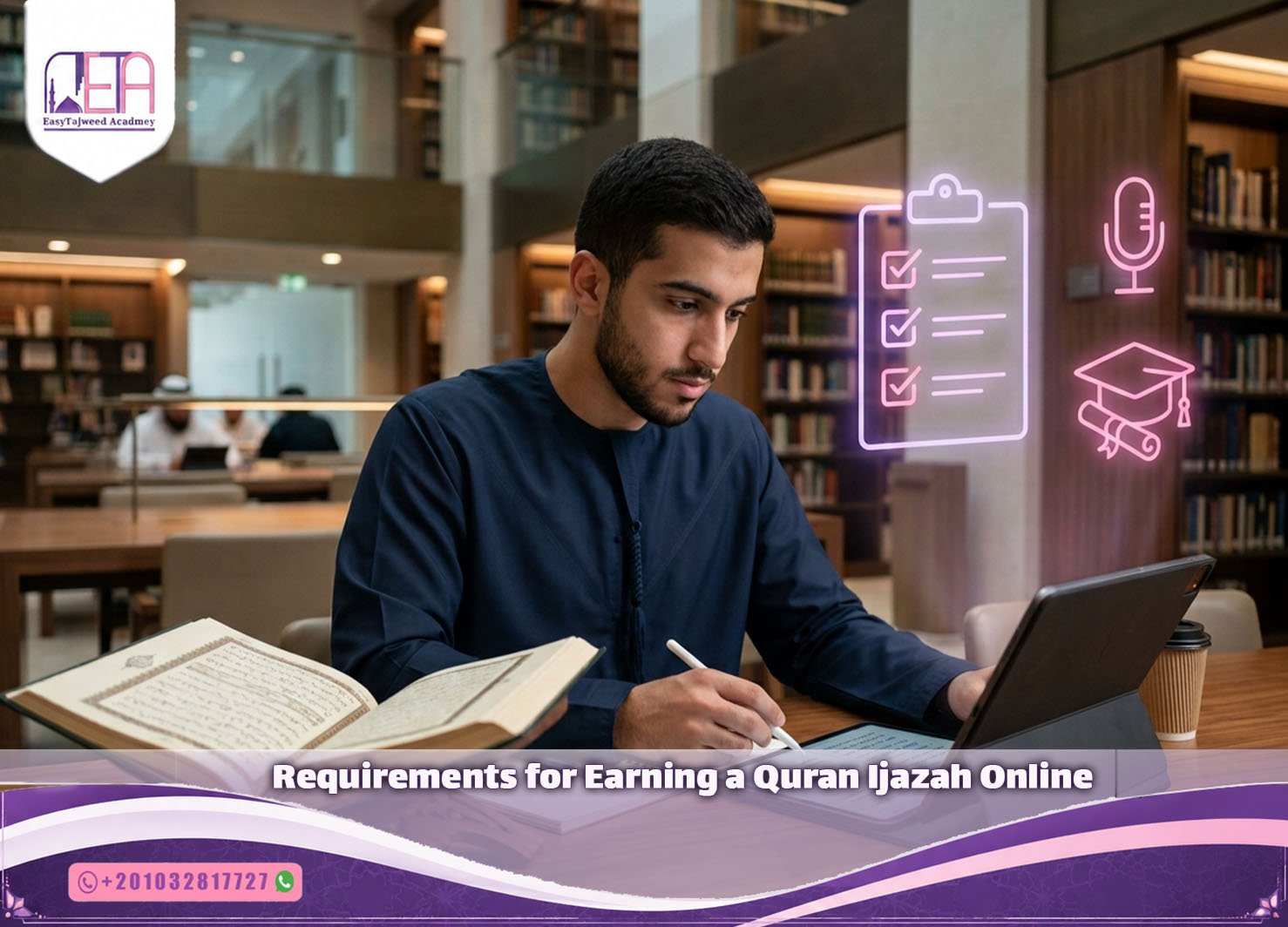
Requirements for Earning A Quran Ijazah Online
The requirements for an Ijazah in Quran depend on the type of Ijazah and the teacher granting it. However, accurate recitation is usually central to the process. A student must demonstrate that they can read the required material with an acceptable level of correctness.
Tajweed knowledge is also important. The student should be able to apply the rules during actual Quran recitation rather than simply explain them theoretically. This is why direct teacher supervision is valuable.
Another requirement can be consistent attendance and practice. An Ijazah in Quran is not normally something that can be achieved through occasional study. Students need regular lessons and independent revision.
A teacher may also evaluate the student’s pronunciation, fluency, stopping and starting, and ability to maintain accuracy throughout longer passages. For some programs, memorization may be an additional requirement.
Students should ask about requirements before joining. Important questions include:
- What type of Ijazah does the course provide?
- Who is the qualified teacher?
- What level of Quran recitation is required?
- Is Tajweed assessment included?
- Is there a sanad or transmission chain?
- What material must the student complete?
- How is the final assessment conducted?
- What does the Quran Ijazah certificate represent?
Students should also be cautious about searching for an Ijazah course for free without checking its authenticity and teacher qualifications. Free educational resources can be useful for learning basic concepts, but formal authorization requires qualified assessment and a teacher who has the authority to grant it.
An Ijazah in Quran should therefore be viewed as a responsibility as well as an achievement. Anyone who receives authorization to teach the Qur’an should understand the importance of accurate transmission.
Choose the Best Quran Ijazah Course
Choosing the best Ijazah in Quran course requires more than looking at price or convenience. Students should first consider the quality of teaching. A qualified teacher who listens carefully and provides detailed corrections is essential for serious Quran study.
Course structure is another important factor. A good Quran Ijazah course should have a clear learning path. Students should know what they will study, how their progress will be measured, and what they need to achieve before receiving certification.
Flexibility is particularly useful for online students. Adults may need evening classes, while children may require lessons around school schedules. An online program should make learning practical without compromising educational quality.
Easy Tajweed Academy is a strong option for students seeking structured online Quran learning with an emphasis on Tajweed and accurate recitation. Learners can use online instruction to receive direct guidance while studying from the comfort of home.
Before enrolling in an Ijazah in Quran program, consider the teacher’s qualifications, lesson format, assessment process, course requirements, and type of certification. Also check whether the program clearly distinguishes between a general completion certificate and actual Ijazah authorization.
A reliable Quran Ijazah pathway should encourage students to learn carefully rather than rush toward a certificate. The ultimate objective is to preserve accurate Quran recitation and responsible teaching.
For someone who wants to teach the Quran in the future, this foundation is especially important. An Ijazah can provide a meaningful connection to the traditional system of Quranic transmission, while online learning makes access to qualified teachers easier for students around the world.
Conclusion
Earning an Ijazah in Quran is a meaningful achievement for anyone who wants to strengthen their Quran recitation and pursue advanced Quranic education. It represents more than completing online lessons. It involves study, practice, correction, assessment, and permission from a qualified teacher.
With the right teacher, a structured Ijazah Quran online program can make this traditional learning journey accessible from home. Students should choose programs based on teacher qualifications, authentic assessment, clear requirements, and the quality of Quranic instruction.
If your goal is to improve your quran recitation, master Tajweed, and work toward genuine Quran certification, beginning with a qualified teacher is an excellent first step. Easy Tajweed Academy can provide a structured environment for students who want to learn, practice, and progress toward an Ijazah in Quran with confidence and responsibility.
